Medically reviewed by Dr. Ponlawat Pitsuwan, Physician, Takecare Clinic Phuket. Last reviewed: September 2026.
Holiday gout flares are something I see regularly: a sudden hot, swollen big toe after a few days of seafood, beer and too little water. The flare can be treated quickly, and I also talk about longer-term prevention with patients who have had several attacks.
Gout flares have a habit of arriving on the second or third night of a Phuket holiday. The recipe is familiar: a long flight with little water, days in the heat, plenty of cold beer and a few seafood dinners, then waking in the small hours with a big toe too painful to bear the weight of a bedsheet. Some people have had gout before; others assume they have broken a toe. Either way, the sooner treatment starts, the sooner the flare settles.
How uric acid becomes painful crystals
Uric acid is a waste product made when the body breaks down purines, substances found in our own cells and in many foods. Normally it stays dissolved in the blood and leaves through the kidneys. When blood levels rise above about 6.8 mg/dL (roughly 400 µmol/L), the point at which urate stops dissolving, needle-shaped crystals of monosodium urate can form in and around joints, especially cooler ones such as the toes. A flare is the immune system’s fierce reaction to those crystals.
Risk rises with male sex, age, family history, excess weight, high blood pressure, chronic kidney disease, diabetes and certain medicines, including water tablets (diuretics) and low-dose aspirin. Alcohol, especially beer and spirits, sugary drinks sweetened with fructose, red meat, offal and some seafood all push urate up. Flares are often triggered by dehydration, a binge, a minor injury or an illness.
Recognising a flare, and ruling out look-alikes
A gout flare builds quickly, often overnight, and peaks within 24 hours. The joint becomes red or purplish, shiny, hot, swollen and exquisitely tender. The big toe is the classic site, but the ankle, midfoot, knee, wrist and fingers are affected too, and a mild fever is possible. Untreated, a flare usually settles within one to two weeks. Several conditions can look similar, and one of them is an emergency.
| Condition | Typical clues | Why it matters |
|---|---|---|
| Gout flare | Sudden, very tender, red, hot joint, often the big toe at night | Settles with colchicine, NSAIDs or steroids |
| Septic arthritis | Hot swollen joint with fever and feeling unwell | Joint infection that can destroy a joint in days; hospital needed |
| Cellulitis | Spreading red skin, a break such as a coral cut or bite | Needs antibiotics |
| Pseudogout | Knee or wrist, usually older adults | Different crystals, similar treatment |
| Fracture or sprain | Clear injury, bruising | May need an X-ray |
How we confirm gout
Often the history and examination are enough. We check your temperature, look at the joint and the skin around it, and ask about previous attacks, medicines, alcohol and kidney problems. A blood test for serum uric acid helps, but levels can be falsely normal during a flare, so UK NICE guidance advises repeating it at least two weeks after the flare settles. We also check kidney function, inflammation markers and a blood count, with results the same day through our blood tests in Phuket. The definitive test is joint aspiration, drawing a little fluid with a needle to look for crystals under a microscope and exclude infection; if septic arthritis is possible, we refer you to hospital for this.
Treating the flare
NICE guidance recommends starting one of three first-line options as early as possible. An NSAID such as naproxen, taken with a stomach-protecting proton pump inhibitor, suits many people. Colchicine, a plant-derived anti-inflammatory, is given at a low dose of 500 micrograms two to four times a day; higher doses mainly add diarrhoea. A short course of prednisolone, a steroid, usually 30 to 35 mg daily for 3 to 5 days, works when the others are unsuitable, and a steroid injection into the joint is another option.
NSAIDs are avoided with kidney disease, stomach ulcers, heart failure or blood thinners, and in Phuket also until dengue fever is ruled out. Colchicine interacts with drugs such as clarithromycin, certain antifungals and some statins, so bring a list of your medicines. Rest and raise the joint, apply a towel-wrapped ice pack for about 20 minutes at a time, and keep bedding off the toe.
The long game: urate-lowering therapy
Treating flares does not remove the crystals; lowering urate does. NICE advises offering urate-lowering therapy to people with recurrent or troublesome flares, and particularly to those with chronic kidney disease, tophi (chalky lumps of crystals under the skin), joint damage or diuretic use. Allopurinol is first-line, with febuxostat as an alternative. The dose starts low and rises every few weeks until serum urate stays below 360 µmol/L (6 mg/dL), or below 300 µmol/L if you have tophi. Low-dose colchicine is often given for the first few months because falling urate can briefly trigger flares. Treatment is usually lifelong.
People of Thai, Han Chinese or Korean descent more often carry the gene variant HLA-B*5801, which raises the risk of a severe allergic reaction to allopurinol, so testing first is recommended. Because the dose needs regular blood tests, we usually suggest starting with a doctor who can follow you up.
Beer, seafood and heat: gout in Phuket
Holidays here combine several triggers at once. Beer is a double hit, adding purines from brewer’s yeast while alcohol slows the kidneys’ removal of urate. Seafood feasts of prawns, crab and mussels add more purines, and fruit shakes and sweetened iced drinks bring fructose. Heat and sweating concentrate the blood, and long flights dehydrate you before you even arrive. Minor toe knocks from walking barefoot on the beach can set off a flare in a joint that is already primed.
When to see a doctor
A first suspected attack deserves a doctor so the diagnosis is confirmed, as do repeated flares. People with kidney disease, those on blood thinners and anyone unsure whether a red, painful foot might be an infection from a cut should be seen promptly.
Prevention and early detection
Lose weight gradually if you need to, since crash diets raise urate. Keep alcohol modest, especially beer and spirits, swap sugary drinks for water, and treat red meat, offal and shellfish as occasional rather than nightly. If you take a diuretic for blood pressure, ask your doctor whether an alternative such as losartan, which slightly lowers urate, would suit you. Gout often travels with high blood pressure, diabetes, high cholesterol and kidney disease, so early detection means checking all of them; a health check-up in Phuket covers these in one visit.
Getting gout treated fast in Phuket
Walk in 24/7 at the Bangtao (Cherngtalay) clinic, the Kata-Karon clinic or the Patong clinic, or message us on WhatsApp first; you can also call +66 81 718 9080. Bring your medicines, and wear loose footwear. Our walk-in doctor in Phuket page explains what to expect.
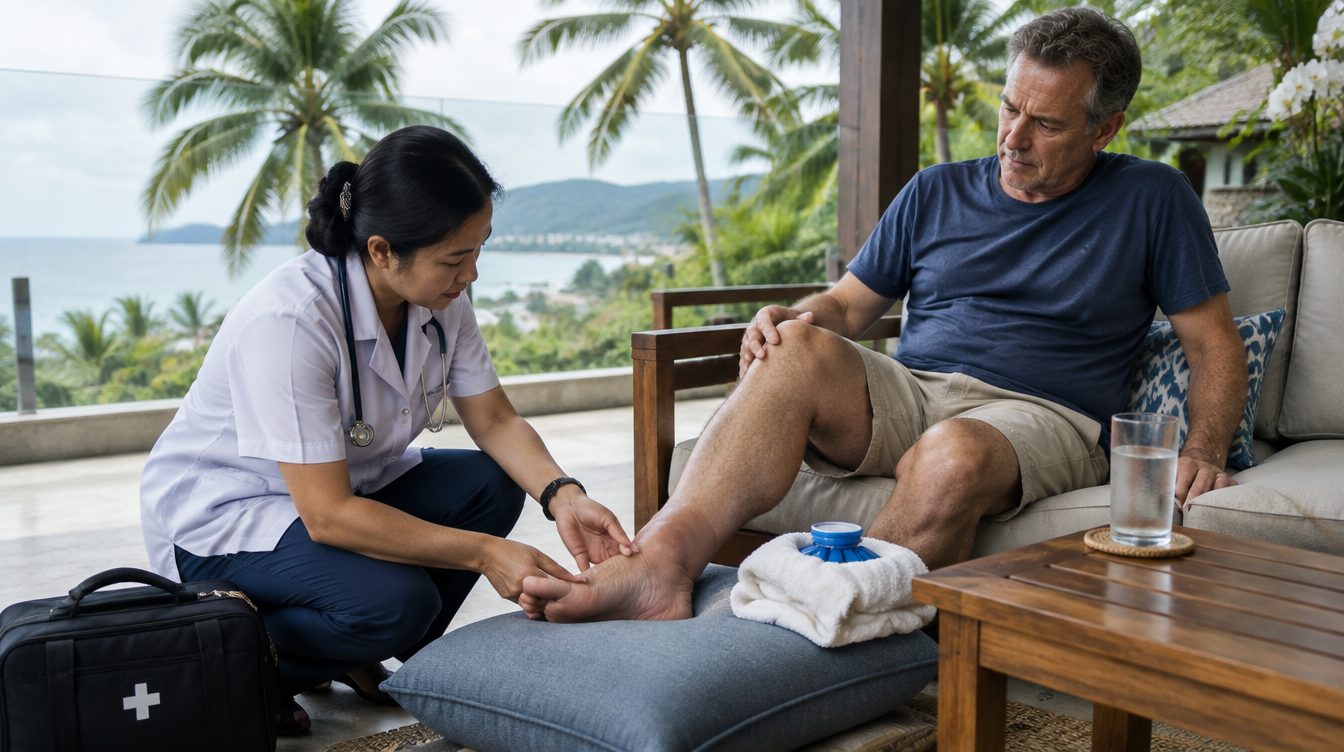
If you cannot put weight on your foot, book a doctor hotel visit in Phuket; the doctor examines the joint, starts treatment and can take blood in your room. We can usually bill your travel insurer directly, and otherwise provide the receipt, medical report and itemised invoice your insurer will ask for. We confirm the price on WhatsApp before your visit.
Related services and treatments
We also treat other common problems that interrupt a holiday, including UTI treatment for bladder infections, migraine treatment for severe headaches and pink eye treatment for sore, red eyes. See our full list of conditions we treat for more.
Summary
Gout is caused by urate crystals in a joint, and a flare brings sudden, severe pain, most often in the big toe. Colchicine, an NSAID or a short steroid course, started within 24 hours, settles most flares, while long-term allopurinol aimed at a urate below 360 µmol/L prevents them. In Phuket, stay hydrated, go easy on beer and seafood, and treat a hot joint with fever as an emergency until infection is excluded.
“Drink plenty of water, ease off beer and shellfish during a flare, and do not stop your usual urate-lowering medicine because of an attack.”
Dr. Ponlawat Pitsuwan, Physician, Takecare Clinic Phuket
Frequently asked questions
Will travel insurance pay for a gout flare, and what does treatment cost?
A first-ever flare is usually covered as a sudden illness, but if you have had gout before it may count as a pre-existing condition, so check whether you declared it. We direct-bill most travel insurers or give you a receipt, medical report and itemised invoice. The cost depends on the medicines and any blood tests, and we confirm the price on WhatsApp before your visit.
How quickly will the pain ease once treatment starts?
Most people feel a clear improvement within 24 to 48 hours of starting colchicine, an NSAID or a steroid, particularly if treatment begins within the first day of the flare. Swelling and tenderness take longer, often several days to a week. If the pain is no better after two to three days, come back so we can reassess and rule out infection.
Do I need to book, or can I just hobble in?
No booking is needed. All three clinics take walk-ins around the clock and you are usually seen within minutes. Ask your taxi driver to drop you at the door, and let the front desk know if you need help getting inside. Bring a list or photos of your regular medicines, because several gout treatments interact with common drugs.
Can a doctor come to my hotel if I cannot walk?
Yes. Our doctors visit hotels, villas and condos anywhere in Phuket, day and night. The doctor examines the joint, checks for signs of infection, starts treatment from our pharmacy and can take blood samples in your room for same-day results. If a joint infection is suspected, we arrange hospital transfer directly.
Should I start allopurinol while I am on holiday?
Usually it is better to wait until the flare has settled and start with a doctor who can check your urate every few weeks and adjust the dose. People of Thai, Han Chinese or Korean descent should have an HLA-B*5801 gene test first. If you are staying in Phuket for months, we can start and monitor treatment here.
Can I still drink beer and eat seafood with gout?
You do not have to give them up completely, but quantity matters. Beer and spirits raise urate more than wine, and large seafood meals add a purine load that can tip you into a flare. Keep portions moderate, alternate alcohol with water, avoid sugary drinks and, if you have frequent flares, urate-lowering medicine protects you far more than diet alone.
Sources
The NHS guide to gout explains symptoms, flare treatment and lifestyle advice. NICE guideline NG219 on gout diagnosis and management sets out the flare options, urate targets and allopurinol approach used on this page. MedlinePlus has a clear patient overview of gout and uric acid.
gout, gouty arthritis, gout flare, hyperuricaemia, uric acid, monosodium urate crystals, tophi, podagra, septic arthritis, pseudogout, colchicine, naproxen, ibuprofen, prednisolone, allopurinol, febuxostat, HLA-B*5801, serum urate test, joint aspiration, NICE NG219, NHS, MedlinePlus, Bangtao, Kata, Karon, Patong, Takecare Clinic Phuket, Dr. Ponlawat Pitsuwan
This page is general health information and not a substitute for a medical consultation.