Medically reviewed by Dr. Ponlawat Pitsuwan, Physician, Takecare Clinic Phuket. Last reviewed: September 2026.
Red, sticky eyes are common in visitors, especially after swimming pools, dusty scooter rides or close contact with someone who already has conjunctivitis. Most cases are mild. I always check vision and pain carefully, though, because a few serious eye problems can look similar at first.
Red, gritty eyes are a common holiday complaint in Phuket, and not all of them are pink eye. Salt water, pool chlorine, sunscreen running into the eyes, dust from scooter rides and air-conditioning can all irritate the eye’s surface. Genuine conjunctivitis often moves through a family or travel group sharing towels, pillows and pool loungers. Contact lens wearers get special attention from us, because a red eye under a lens can be an infection of the cornea rather than simple pink eye.
What pink eye is and why it happens
The conjunctiva is a thin, clear membrane covering the white of the eye and the inside of the eyelids. When it becomes inflamed, its tiny blood vessels widen and the eye turns pink. Viral conjunctivitis, usually from adenovirus, often follows a cold and spreads from one eye to the other within days. Bacterial conjunctivitis glues the lashes together overnight with thick discharge. Allergic conjunctivitis affects both eyes, itches intensely and often comes with sneezing. Irritants such as chlorine or sunscreen cause a fourth, short-lived type, and conjunctivitis caused by gonorrhoea or chlamydia can follow sexual contact; the gonorrhoeal form, with heavy pus, needs same-day treatment to protect the cornea.
| Type | Discharge and feel | Contagious? | Usual treatment |
|---|---|---|---|
| Viral | Watery, gritty, often after a cold | Very, for up to two weeks | Cool compresses, lubricating drops |
| Bacterial | Thick yellow or green, lids stuck in the morning | Yes | Often self-limiting; antibiotic drops speed recovery |
| Allergic | Watery, intensely itchy, both eyes | No | Antihistamine drops or tablets |
| Irritant | Stinging after chlorine, sunscreen or sand | No | Rinse with clean water or saline |
| Gonococcal | Heavy pus, rapid swelling | Yes, sexually and by contact | Urgent same-day antibiotics |
When a red eye is not pink eye
Pink eye is uncomfortable and gritty, but it is not usually truly painful, and your vision stays clear once you blink away any discharge. Pain, blurred vision and sensitivity to light suggest something deeper. Keratitis, an infection or inflammation of the cornea, is the main worry in contact lens wearers, especially after swimming or showering in lenses. Acute glaucoma causes severe eye pain, haloes around lights, headache and vomiting. Iritis, inflammation inside the eye, brings an aching red eye and light sensitivity. A scratch from sand or grit on a scooter ride causes sharp pain and watering, and a bright red painless patch on the white of the eye is usually a harmless burst vessel after coughing or straining.
How we examine and treat your eyes
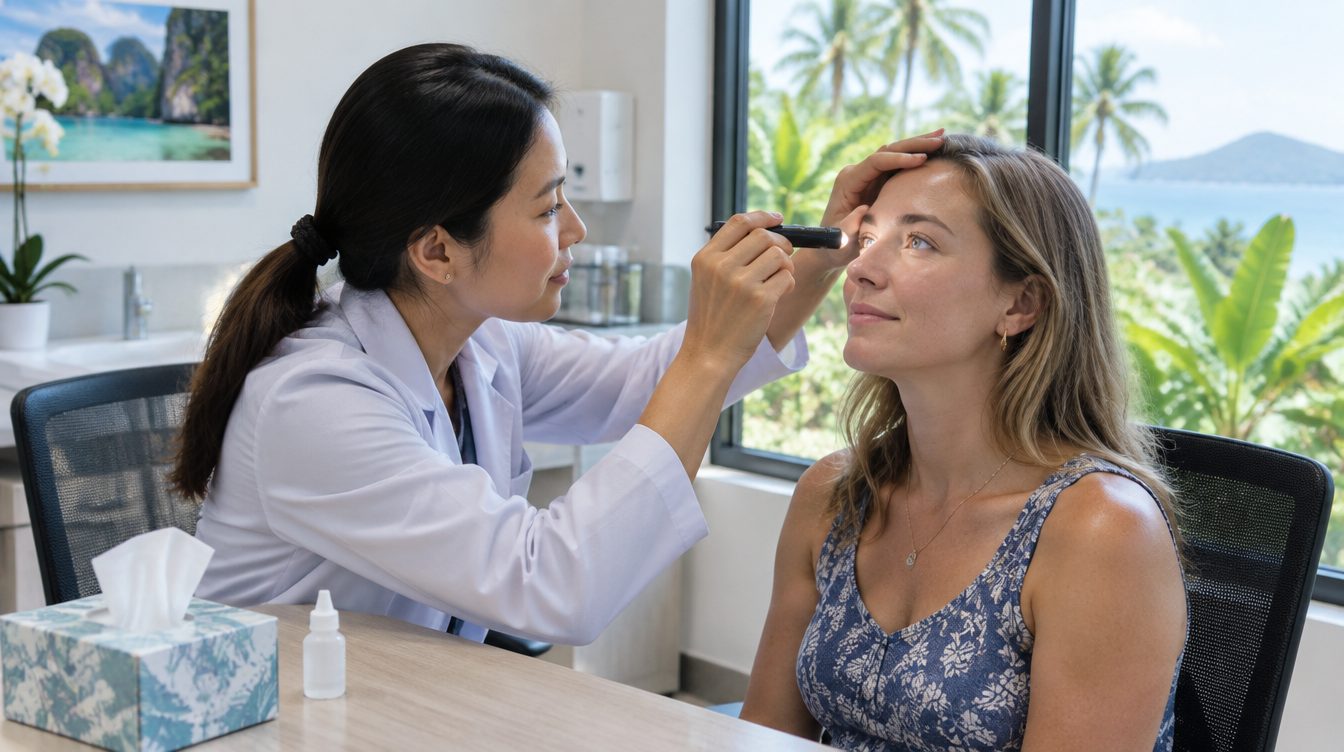
We ask about discharge, itching, colds, allergies, contact lenses and, where relevant, sexual contact, then test your vision and examine the lids, conjunctiva, cornea and pupils with a bright light. Fluorescein, an orange dye viewed under blue light, shows scratches or ulcers on the cornea. A swab for laboratory testing helps with severe, recurrent or lens-related infections and suspected gonorrhoea or chlamydia.
Viral pink eye needs no antibiotics: cool compresses and lubricating drops (artificial tears) ease it while it runs its course. Bacterial pink eye often clears within five to seven days on its own, but antibiotic drops or ointment such as chloramphenicol or fusidic acid can shorten it and reduce spread. Contact lens wearers get drops that cover Pseudomonas, a bacterium that can damage the cornea quickly, such as ofloxacin. Allergic conjunctivitis responds to antihistamine drops or a tablet such as cetirizine; if hay fever or dust allergy is behind it, our allergy treatment page covers the wider picture. If anything suggests a deeper problem, we refer you the same day to a hospital eye specialist.
Self-care and stopping it spreading
Clean away discharge with cotton pads soaked in cooled boiled water or sterile saline, using a fresh pad for each eye and wiping from the inner corner outwards. Wash your hands often, avoid rubbing your eyes and keep your own towel and pillowcase. Skip eye make-up until the eye has recovered and throw away mascara or liner used during the infection. Leave contact lenses out until your eyes are completely better and any drops are finished, and replace disposable lenses and the case. Stay out of pools and the sea while the eye is sticky, which protects both you and other swimmers.
Pools, sun and scooters: the Phuket angle
Several holiday habits make eyes vulnerable here. Swimming pools can spread adenovirus between guests, and chlorine irritates eyes that are already inflamed. Swimming or showering in contact lenses exposes the cornea to Acanthamoeba, an organism in fresh and tap water that causes a rare but serious infection. A long day on a boat without sunglasses can cause photokeratitis, a sunburn of the cornea that makes both eyes painful and gritty a few hours later. Scooter rides without a visor deliver dust and insects straight into the eye, and air-conditioned rooms and long flights dry the surface.
When to see a doctor
Most viral and allergic pink eye can be managed at home, but see a doctor the same day if you wear contact lenses and have a red eye, if the eye is painful rather than gritty, if your vision is blurred or light hurts, or if only one eye is intensely red. Symptoms lasting beyond 7 to 10 days, heavy pus after possible exposure to a sexually transmitted infection, a rash or cold sore near the eye, a weakened immune system and sticky eyes in a newborn all need assessment.
Prevention and early detection
Handwashing is the best defence against the infectious types. Do not share towels, make-up or eye drops, and in shared accommodation change pillowcases often while anyone has pink eye. If you wear contact lenses, never swim, snorkel or shower in them, never rinse lenses or the case with tap water, and carry glasses for beach days. Wear wraparound sunglasses on boats and beaches, goggles in the pool and a visor on a scooter. Early detection means acting on the first signs: a lens wearer with a red, uncomfortable eye should remove the lens and be seen that day, since early treatment of keratitis protects vision.
Having your eyes checked at Takecare Clinic
We see red eyes around the clock at the Bangtao (Cherngtalay) clinic, the Kata-Karon clinic and the Patong clinic. Walk in at any time, or message us on WhatsApp with a photo of the eye first; you can also phone +66 81 718 9080. If you wear contact lenses, bring your lens case and solution. Our walk-in doctor in Phuket page explains the visit, and drops come from our on-site pharmacy.
For a child or a whole family with sticky eyes, a doctor hotel visit in Phuket avoids spreading it around a waiting room. Insurance paperwork is handled on the spot: direct billing with most travel insurers, or a receipt, medical report and itemised invoice ready before you leave. We confirm the price on WhatsApp before your visit.
Related services and treatments
Alongside eye problems we treat many other everyday conditions, including bladder infections through UTI treatment, severe headaches with migraine treatment and painful joints with gout treatment. Browse our list of conditions we treat for the rest.
Summary
Pink eye is inflammation of the conjunctiva, and it can be viral, bacterial, allergic or irritant. Viral cases need only comfort measures, bacterial cases often settle alone but clear faster with antibiotic drops, and allergic cases respond to antihistamines. Pain, blurred vision, light sensitivity or a red eye in a contact lens wearer point to something more serious and need a same-day examination.
“Do not share towels or pillows, and take out contact lenses until your eye is clear. Pain, blurred vision or sensitivity to light needs to be checked the same day.”
Dr. Ponlawat Pitsuwan, Physician, Takecare Clinic Phuket
Frequently asked questions
Does travel insurance cover pink eye treatment, and what will it cost?
An eye infection that starts on holiday is usually covered as a sudden illness, though your policy excess may be higher than the cost of a simple visit, so check your terms. We direct-bill most travel insurers or provide a receipt, medical report and itemised invoice. The cost depends on the examination and any drops, and we confirm the price on WhatsApp before your visit.
How long does pink eye last, and when am I no longer contagious?
Viral pink eye usually lasts one to two weeks and can spread for as long as the eye is red and watery. Bacterial pink eye often improves within a few days of starting antibiotic drops and is much less contagious after 24 to 48 hours of treatment. Allergic pink eye is never contagious and settles once the trigger is removed or treated.
Do I need an appointment for a red eye, or can I walk in?
You can walk in at any time; no appointment is needed at any of our three clinics. If you are unsure whether it is urgent, send a photo on WhatsApp and we will advise. Please tell the front desk straight away if you wear contact lenses, have eye pain or notice any change in your vision.
Can a doctor examine my eye at my hotel or villa?
Yes. Our doctors visit hotels, villas and condos across Phuket 24/7 and can carry out a basic eye examination in your room, checking your vision, eyelids and the surface of the eye. This is convenient for children or several family members at once. If the eye needs a specialist microscope examination, we arrange a hospital referral.
Can I go swimming or snorkelling with pink eye?
It is best to stay out of the water until the redness and discharge have cleared. Chlorine and salt water irritate an inflamed eye, and infectious pink eye can spread to others in a pool. If you wear contact lenses, never swim in them at any time, as water exposure raises the risk of a serious corneal infection.
I wear contact lenses and my eye is red. Is it just pink eye?
It might be, but do not assume so. Remove your lenses straight away and switch to glasses. A red, uncomfortable eye in a lens wearer can be keratitis, an infection of the cornea that can damage vision within a day or two. Come in the same day, bring your lens case, and do not put the lenses back in until a doctor has checked your eye.
Sources
The NHS page on conjunctivitis covers self-care, contact lenses and when to get help. The CDC’s pink eye pages explain the viral, bacterial and allergic causes and how to prevent spread. MedlinePlus has a patient overview of pink eye.
pink eye, conjunctivitis, viral conjunctivitis, bacterial conjunctivitis, allergic conjunctivitis, adenovirus, gonococcal conjunctivitis, keratitis, Acanthamoeba, photokeratitis, acute glaucoma, iritis, chloramphenicol, fusidic acid, ofloxacin, cetirizine, artificial tears, fluorescein eye stain, NHS, CDC, MedlinePlus, Bangtao, Kata, Karon, Patong, Takecare Clinic Phuket, Dr. Ponlawat Pitsuwan
This page is general health information and not a substitute for a medical consultation.