Medically reviewed by Dr. Ponlawat Pitsuwan, Physician, Takecare Clinic Phuket. Last reviewed: September 2026.
Bright sunlight, skipped meals, dehydration and disrupted sleep after long flights are common migraine triggers I see in visitors. Many migraine sufferers know their pattern well. What they need is effective relief and reassurance that nothing more serious is going on.
Many migraine patients we see in Phuket already know their condition well; what has changed is the setting. Long-haul flights, jet lag, late nights, skipped meals, glare off the sea, heat and alcohol can all push attacks up during a holiday. Some people have left their usual tablets at home or run out mid-trip. Others believe they are having a first migraine, and for them our first job is to make sure it is not something more serious.
What is going on in a migraine
Migraine is a neurological condition, not just a bad headache. During an attack, pain pathways in the brain linked to the trigeminal nerve become overactive and release CGRP (calcitonin gene-related peptide), a messenger that inflames the blood vessels and membranes around the brain. The older idea that migraine is simply swollen blood vessels is now outdated. It is two to three times more common in women, partly because of hormonal changes.
An attack can unfold in phases. A warning phase of yawning, food cravings, neck stiffness or irritability may come hours beforehand. Roughly a third of people then have an aura: zigzag lines, flashing lights, a spreading blind spot or tingling moving up one arm, usually lasting 5 to 60 minutes. The headache itself lasts 4 to 72 hours untreated, followed by a washed-out recovery phase.
The international headache classification (ICHD-3) diagnoses migraine without aura after at least five such attacks with at least two of four features, one-sided, pulsating, moderate or severe, or worse with routine activity, plus nausea or sensitivity to both light and sound.
Migraine or another kind of headache?
| Headache type | What it feels like | Useful clues |
|---|---|---|
| Migraine | Throbbing, often one-sided, moderate to severe | Nausea, light and sound sensitivity, may follow an aura |
| Tension-type | Pressing band around the head | No nausea, not worse with activity |
| Heat or dehydration | Dull, all over | After sun, sweating or alcohol; eases with fluids |
| Medication overuse | Near-daily dull headache | Painkillers on 10 to 15 or more days a month |
| Dengue fever | Pain behind the eyes with high fever | Body aches, rash; avoid NSAIDs until excluded |
| Dangerous causes | Sudden worst-ever pain, or with fever and stiff neck | Emergency: call 1669 |
How we treat an attack at the clinic
We take a careful history, check blood pressure and temperature, and do a short neurological examination of vision, strength, reflexes and coordination to rule out red flags. We then follow the approach in UK NICE guidance: a triptan such as sumatriptan or rizatriptan combined with an NSAID such as ibuprofen or naproxen, or with paracetamol, plus an anti-sickness medicine such as metoclopramide or prochlorperazine, which also helps the other tablets absorb.
If you are vomiting or the attack is severe, we can give these medicines by injection. A drip helps when vomiting has left you dehydrated, as our IV drip therapy in Phuket page explains, though the fluids treat the dehydration rather than the migraine. Triptans are unsuitable after a stroke or with heart disease or uncontrolled blood pressure, so we check first. We avoid opioids such as codeine and tramadol, which worsen nausea and make future headaches more frequent.
Prevention tablets and medication overuse
If migraine affects you on four or more days a month, preventive medicine such as propranolol, topiramate, amitriptyline or candesartan can reduce frequency and severity, and specialists may add CGRP-blocking injections. Using triptans or combination painkillers on 10 or more days a month, or plain paracetamol or NSAIDs on 15 or more, can cause medication-overuse headache, where the tablets themselves keep the pain going. If you have run short of your usual treatment, our prescription refill in Phuket service can help after a consultation.
What helps during an attack
Take your usual treatment at the first sign of the headache phase rather than waiting to see how bad it gets; triptans work best early and do little if taken during the aura. Lie down in a dark, quiet, cool room, put a cold pack on your forehead or neck, sip water and sleep if you can. Eat a small snack if you have skipped meals. If you tend to vomit, ask us about dissolving tablets or a nasal spray.
Why Phuket can set off attacks
Holidays stack triggers. Glare off water and white sand is a classic one, so wear good sunglasses and a hat. Heat and sweating dehydrate you, and island tours can mean long gaps between meals. Jet lag and late nights disrupt sleep, while the morning coffee you skip on holiday can bring caffeine-withdrawal headache. Time-zone changes can also shift the timing of the contraceptive pill, and for people with hormone-linked migraine that change can trigger an attack. Scuba divers deserve a special mention: a headache after diving with numbness, weakness or confusion may be decompression illness, not migraine.
When to see a doctor
See a doctor for a first severe headache, an aura for the first time or one lasting over an hour, a change in your usual pattern, new headaches after the age of 50, or attacks your usual treatment no longer controls. Headache with fever in Phuket needs assessment for dengue and other infections, and any headache after a scooter fall or knock to the head should be checked.
Prevention and early detection
A headache diary is the most useful prevention tool: note the date, sleep, food, alcohol, stress, menstrual cycle and every tablet you take, and patterns usually emerge within a couple of months. Keep sleep, meals and fluids regular even on holiday, take regular aerobic exercise, and limit acute medicines to fewer than 10 days a month. Early detection works at two levels: learn your warning signs so you can treat each attack early, and see a doctor promptly if your headaches change character, because a new pattern deserves a fresh look.
How to reach us during an attack
We are open 24/7 at the Bangtao (Cherngtalay) clinic, the Kata-Karon clinic and the Patong clinic, and we do our best to keep light and noise down while medicines take effect. Walk in, or message us on WhatsApp first; you can also call +66 81 718 9080. Bring your usual medicines or photos of the packets. Our walk-in doctor in Phuket page explains the visit.
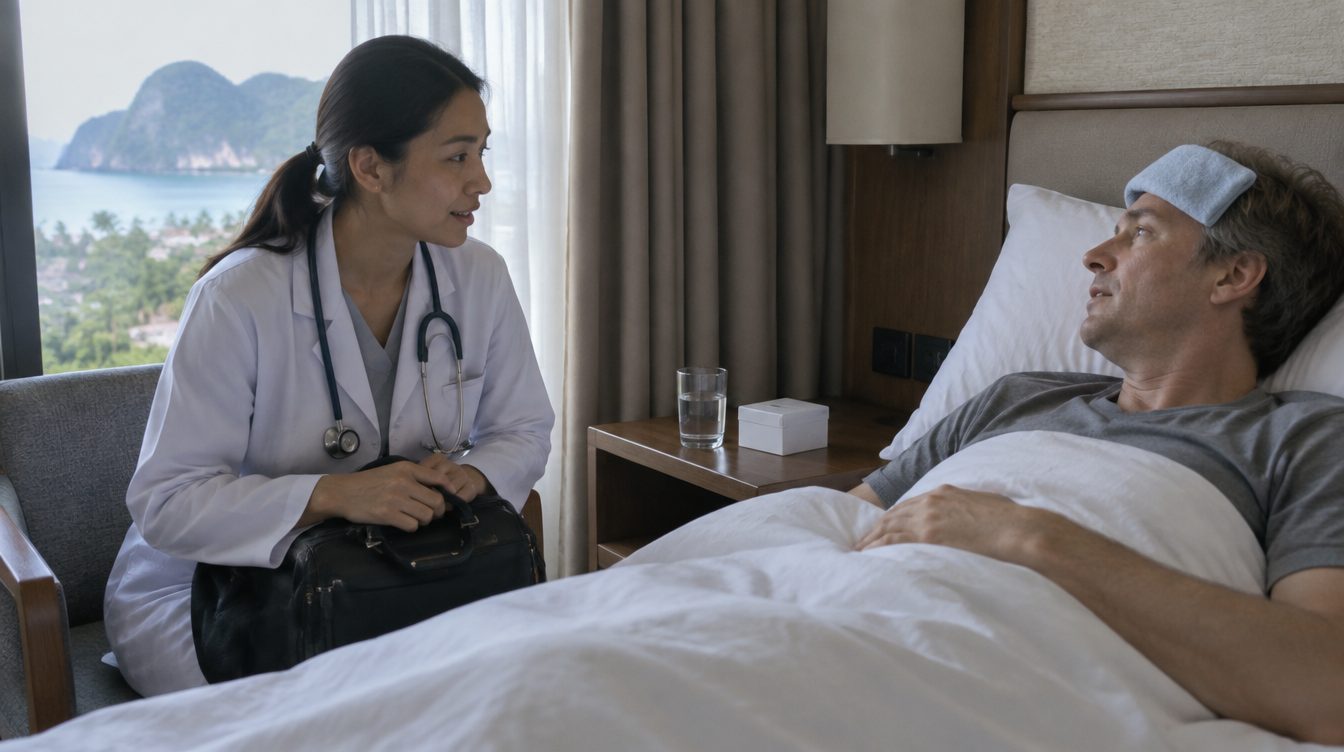
If light and movement are unbearable, a doctor hotel visit in Phuket brings injections and fluids to your darkened room. We bill most travel insurers directly, or give you a receipt, report and itemised invoice for a later claim. We confirm the price on WhatsApp before your visit.
Related services and treatments
We treat many other everyday problems that interrupt holidays, including bladder infections through our UTI treatment service, painful joints with gout treatment, and sore, sticky eyes with pink eye treatment. Our full list of conditions we treat covers the rest.
Summary
Migraine is a neurological condition with recurrent throbbing headaches, nausea and sensitivity to light and sound, and holidays stack up its triggers. Treat attacks early with a triptan plus an anti-inflammatory or paracetamol and an anti-sickness medicine, avoid opioids, and keep painkiller days below the overuse limit. Any sudden, unusual or neurological headache needs emergency care, not another tablet.
“Keep eating and drinking regularly, and take your migraine treatment early in an attack. A sudden, severe headache unlike any before needs emergency care.”
Dr. Ponlawat Pitsuwan, Physician, Takecare Clinic Phuket
Frequently asked questions
Will travel insurance pay for migraine treatment, and what does it cost?
Many policies cover an acute attack abroad, but migraine is often listed as a pre-existing condition, so cover depends on whether you declared it. Check your policy. We direct-bill most travel insurers or provide a receipt, medical report and itemised invoice for claims. The cost depends on the medicines and any injections or drip needed, and we confirm the price on WhatsApp before your visit.
How quickly does a migraine injection work?
An injection of sumatriptan under the skin usually starts easing pain within 15 minutes, faster than tablets. Anti-sickness and anti-inflammatory injections take effect within 30 to 60 minutes. Most people treated at the clinic are well enough to go back to their hotel within an hour or two, though you may feel tired for the rest of the day.
Can I walk in during an attack, or do I need an appointment?
You can walk in at any hour without booking. If you are sensitive to light and noise, tell the front desk and we will try to find you a quieter, dimmer space to wait and be treated. Do not drive or ride a scooter during an attack, especially with visual aura; take a taxi or ask for a hotel visit instead.
Can a doctor treat my migraine in my hotel room?
Yes, and for a severe attack it is often the kindest option. Our doctors visit hotels, villas and condos anywhere in Phuket, 24/7, and can give injections for pain and nausea and a drip if you have been vomiting. The doctor also checks for warning signs and arranges hospital care if anything does not fit migraine.
I have run out of my migraine tablets. Can you replace them?
Usually, yes. After a short consultation we can prescribe the same or an equivalent medicine from our on-site pharmacy. Bring the original packet, a photo of it or your prescription so we can match the drug and dose. Brand names differ between countries, so the generic name, such as sumatriptan or propranolol, is the most helpful detail.
How do I know this headache is a migraine and not something dangerous?
A headache that matches your usual attacks, builds over minutes to hours and responds to your normal treatment is very likely migraine. Warning signs are a sudden worst-ever headache, fever with a stiff neck, weakness, confusion, a change after a head injury or a first severe headache over 50. Any of these needs urgent medical assessment.
Sources
The NHS overview of migraine covers symptoms, triggers and treatment options. NICE guideline CG150 on headaches in over 12s sets out the acute and preventive treatments and medication-overuse limits used here. The World Health Organization fact sheet on headache disorders describes migraine’s global impact.
migraine, migraine with aura, migraine without aura, chronic migraine, medication-overuse headache, tension-type headache, thunderclap headache, CGRP, triptans, sumatriptan, rizatriptan, ibuprofen, naproxen, paracetamol, metoclopramide, prochlorperazine, propranolol, topiramate, amitriptyline, candesartan, ICHD-3, NICE CG150, NHS, WHO, Bangtao, Kata, Karon, Patong, Takecare Clinic Phuket, Dr. Ponlawat Pitsuwan
This page is general health information and not a substitute for a medical consultation.