Medically reviewed by Dr. Ponlawat Pitsuwan, Physician, Takecare Clinic Phuket. Last reviewed: September 2026.
I give IV fluids every day, and for someone who is dehydrated from vomiting, diarrhoea or heat they can make a real difference within the hour. I am more cautious about vitamin drips sold as wellness boosts, because the evidence for them is limited, and I explain that honestly before anyone chooses one.
Requests for drips in Phuket fall into two groups. The first is medical: travellers dehydrated by heat, boat trips, vomiting or diarrhoea who cannot keep enough fluid down. The second is wellness: people who have seen drips advertised for energy, immunity, skin or detox and want to know whether they are worth it. We treat both groups the same way, starting with an assessment and an honest account of what the drip is likely to achieve.
What an IV drip actually is
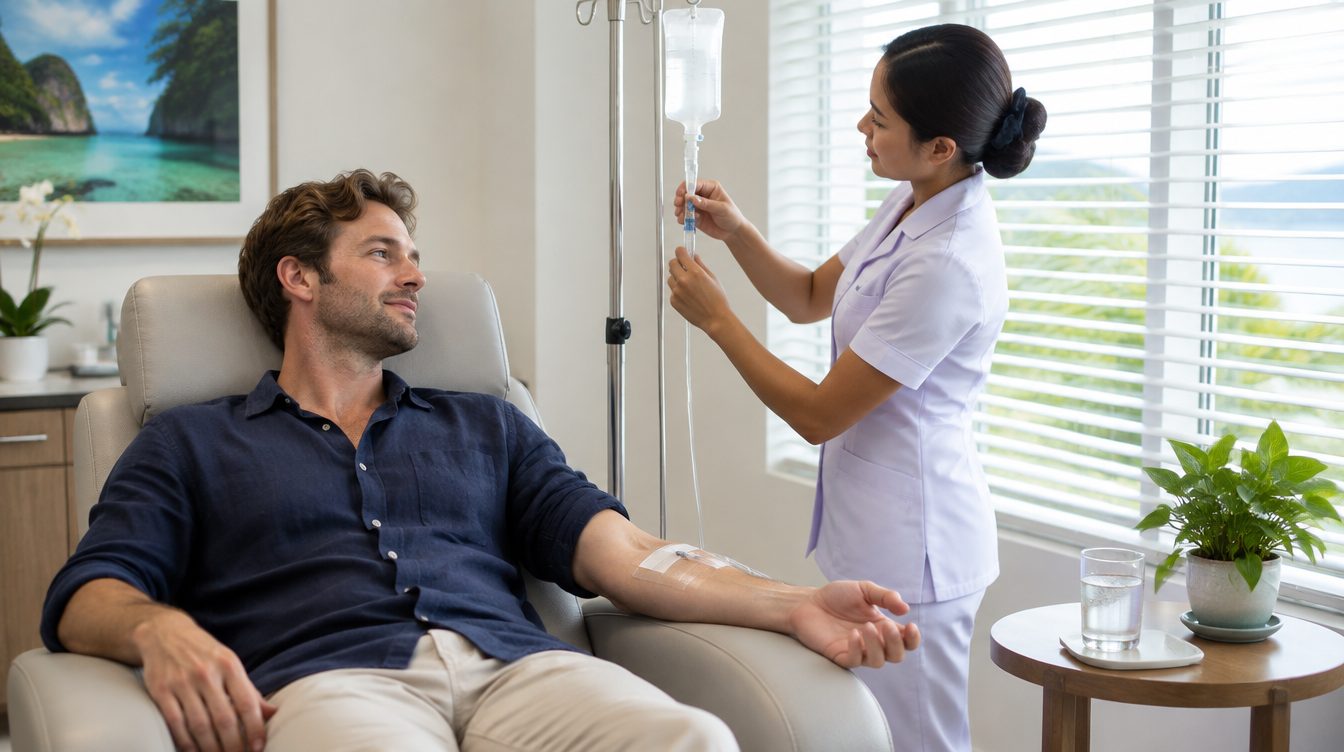
A thin plastic tube called a cannula is placed in a vein, usually on the back of the hand or the forearm, and a bag of fluid runs through it into your bloodstream, typically over 30 to 60 minutes. Because it bypasses the digestive system, it works even when you are vomiting. The base fluid is usually normal saline (0.9% sodium chloride) or Hartmann’s solution, which is closer to the salt balance of blood, and sometimes glucose. Vitamins or medicines are then added to the bag as needed.
The main drips and how strong the evidence is
Drip menus can look impressive, so here is what sits behind the common options.
| Drip or add-on | What the evidence supports | Our honest view |
|---|---|---|
| Rehydration fluids (saline, Hartmann’s) | Strong evidence for moderate or severe dehydration when drinking is not possible | The core of almost every useful drip |
| Anti-nausea medicine (ondansetron, metoclopramide) | Effective at settling vomiting | Very useful with a stomach bug |
| B vitamins (thiamine, B complex, B12) | Treats deficiency; thiamine protects heavy drinkers and the poorly nourished | Little evidence of extra energy if you already eat well |
| High-dose vitamin C | No good evidence that it prevents colds or boosts immunity in healthy people | Not advised if you have a history of kidney stones |
| Magnesium | Corrects a low magnesium level | Limited benefit otherwise |
| Glutathione, detox and skin drips | Weak evidence; your liver and kidneys already do the detoxification | We explain the uncertainty before you decide |
In short, fluids and anti-sickness medicine do most of the work that people notice. If your reason is a heavy night, our hangover IV drip page looks at that single use case in detail.
Who benefits, and who should be careful
The clearest benefit is for dehydration you cannot fix by drinking: repeated vomiting after a bad meal, where food poisoning treatment often includes a drip, heavy diarrhoea covered in our traveller’s diarrhoea treatment guide, and heat exhaustion after a long day outdoors.
Some people need extra caution. Heart failure and kidney disease make fluid overload a real risk. Blood thinners increase bruising at the cannula site, and pregnancy changes which additives are suitable. Dengue is a special case: fluids are part of treatment, but the amount must be guided by repeated blood counts, especially around days 3 to 7, as our dengue fever treatment page explains.
How a drip session works with us
A doctor first takes a history and checks your blood pressure, pulse, temperature and signs of dehydration. Depending on the situation, we may run blood tests for kidney function, salts or a blood count, with same-day results from our laboratory. A nurse then places the cannula, the fluid runs for around 30 to 60 minutes while we monitor you, and the cannula is removed. Keep the small plaster on for an hour and tell us if the site becomes red or sore. You can come as a walk-in doctor in Phuket patient, or have the drip in your room through a doctor hotel visit in Phuket.
Why visitors dehydrate so easily in Phuket
The island is hot and humid all year, and sweat losses climb fast on a boat trip to Phang Nga Bay or a day in the sun at the beach. Add seasickness, a few drinks at lunch or a stomach bug from street food, and fluid intake falls behind. For mild dehydration, oral rehydration solution sipped steadily is the first-line treatment. A drip becomes the better option when vomiting stops you drinking or when you are clearly weak, dizzy and passing very little urine.
When to see a doctor
See a doctor if you have been vomiting for more than a day, cannot keep water down, feel dizzy when you stand, or are passing only small amounts of dark urine. Go to a hospital emergency department or call 1669 for confusion, fainting, a very high temperature after heat exposure with hot dry skin, bloody diarrhoea with high fever, or dengue warning signs such as severe abdominal pain, persistent vomiting, bleeding gums or unusual drowsiness.
Prevention and early detection
Most drips for dehydration are avoidable. Drink regularly through the day rather than in large amounts at once, and add an oral rehydration sachet after heavy sweating or diarrhoea. Check your urine: pale straw colour is the target. Keep alcohol for the evening rather than the midday sun, and rest in the shade at the hottest time. Act on early signs such as thirst, headache and tiredness before they become dizziness.
Getting a drip at Takecare Clinic
Drips are given around the clock at our Bangtao (Cherngtalay) clinic, Kata-Karon clinic and Patong clinic. Walk in or message us first on WhatsApp with your symptoms, or phone +66 81 718 9080; if you cannot travel, the doctor can bring the drip to your hotel or villa. We confirm the price on WhatsApp before your visit. Drips for medical dehydration are often covered by travel insurance and we direct bill most insurers, while wellness drips are usually not covered.
Related services and treatments
A drip is one tool among many. For vaccinations, blood tests, sexual health and other treatments, see all our medical services.
Summary
IV drip therapy in Phuket is genuinely useful for dehydration from heat, vomiting or diarrhoea, especially when anti-sickness medicine is added. Vitamin, immunity and detox drips have limited evidence beyond correcting a deficiency. A doctor should always assess you first, particularly if you have heart or kidney problems or dengue. When you can drink, oral rehydration comes first.
“A drip is a medical treatment, not a spa product. I will always check your health history first and tell you plainly whether you actually need one.”
Dr. Ponlawat Pitsuwan, Physician, Takecare Clinic Phuket
Frequently asked questions
Will my travel insurance pay for an IV drip?
Usually only when it is medically necessary, for example for dehydration from vomiting or diarrhoea, and the doctor documents why. Wellness and vitamin drips are generally not covered. We direct bill most travel insurers for eligible treatment, and we confirm the price on WhatsApp before your visit if you are paying yourself.
How long does a drip take, and can I go back to the beach afterwards?
Most drips run for roughly 30 to 60 minutes, plus a short assessment beforehand. If you had it for dehydration, take it easy for the rest of the day, keep drinking, and avoid alcohol and strong sun. Swimming is fine once the cannula site has sealed, usually after a few hours.
Can I walk in for a drip without an appointment?
Yes. All three clinics accept walk-ins 24 hours a day, and a doctor assesses you before any drip is started. Messaging on WhatsApp first lets us prepare, and it is also a quick way to ask whether a drip is really what you need.
Can I have the drip at my villa instead of the clinic?
Yes, when it is medically appropriate. We can send a doctor to wherever you are staying on the island, whether a resort room, villa or condo, to assess you and set up the drip on the spot. This is often the best option when you are vomiting too much to travel comfortably.
Will a vitamin drip boost my immune system before my flight home?
There is no good evidence that intravenous vitamins prevent colds or infections in healthy, well-nourished people. What helps before a long flight is arriving well hydrated and rested, drinking water on board and limiting alcohol. If you feel unwell before travelling, a check-up is more useful than a drip.
Is a drip safe if I take blood thinners or have heart or kidney problems?
Plain rehydration fluids are usually safe with blood thinners, although they raise the chance of bruising where the cannula goes in. Heart failure and kidney disease need more care, because the body may struggle with extra fluid, so the doctor adjusts the amount and speed. Tell us about any long-term condition before anything is added to the drip.
Sources
The NHS describes the signs and treatment of dehydration. The NIH Office of Dietary Supplements reviews the evidence on vitamin C, including its limited effect on colds, and on vitamin B12 deficiency.
IV drip Phuket, intravenous therapy, IV hydration, normal saline, Hartmann’s solution, dextrose, ondansetron, metoclopramide, thiamine, vitamin B12, vitamin C, magnesium, glutathione, oral rehydration solution, dehydration, heat exhaustion, dengue, NIH Office of Dietary Supplements, NHS, Phang Nga Bay, Bangtao, Kata, Patong, Takecare Clinic Phuket, Dr. Ponlawat Pitsuwan
This page is general health information and not a substitute for a medical consultation.