Medically reviewed by Dr. Ponlawat Pitsuwan, Physician, Takecare Clinic Phuket. Last reviewed: September 2026.
Allergies I see in Phuket range from hay fever to hives after shellfish or unfamiliar foods, and occasionally serious reactions. I take any history of throat swelling or breathing difficulty seriously, because the next reaction can be worse than the last.
Allergies on holiday often come from something new. A first taste of a shrimp-paste curry, satay sauce or a seafood platter, an unfamiliar sunscreen, a sting on a jungle walk or a hotel pillow full of dust mites can set off reactions in people who rarely have trouble at home. Over-the-counter antibiotics and painkillers are regular causes of drug rashes. Most reactions are uncomfortable rather than dangerous, but a few escalate within minutes, and knowing the difference matters most.
The reactions we see most, and how we treat them
An allergy is the immune system overreacting to a harmless allergen: IgE antibodies on mast cells trigger the release of histamine, causing itching, sneezing, swelling and rashes, and in severe cases airway narrowing and falling blood pressure.
Hay fever and allergic rhinitis
Allergic rhinitis brings sneezing, a runny or blocked nose and itchy, watery eyes. Phuket’s humidity favours dust mites and mould, so symptoms often appear indoors and on waking. First-line treatment is a non-sedating antihistamine such as cetirizine, loratadine or fexofenadine, plus a steroid nasal spray such as fluticasone or mometasone, which takes a few days to reach full effect but works best for a blocked nose.
Food allergy and the Thai kitchen
Food reactions range from tingling lips to anaphylaxis, most often from shellfish, fish, peanuts, cashews and other tree nuts, egg, milk, wheat, soy or sesame. Avoidance is harder than it looks: fish sauce, shrimp paste and oyster sauce season many dishes, peanuts appear in satay, pad thai and som tam, and street-food woks are rarely cleaned between orders. Carry a card written in Thai script: the word for allergic is phae, so แพ้กุ้ง (phae kung) means allergic to shrimp and แพ้ถั่วลิสง (phae thua lisong) allergic to peanuts.
Some reactions only mimic allergy. Scombroid poisoning occurs when fish such as tuna or mackerel has been stored too warm and bacteria have produced histamine; within an hour people develop flushing, a peppery taste, headache and hives, often several diners at once. It responds to antihistamines and does not mean you must avoid fish in future.
Hives and swelling (urticaria and angioedema)
Urticaria is an itchy rash of raised welts that move around the body over hours. Acute hives, lasting under six weeks, follow a virus, food, medicine or sting, though often no cause is found, and sweating after exercise can cause small prickly hives called cholinergic urticaria. A daily non-sedating antihistamine is first-line, sometimes at a higher dose on medical advice, with a short steroid course for severe cases. Angioedema is deeper swelling of the lips, eyelids or face; swelling of the tongue or throat is an emergency.
| Reaction | Typical signs | First-line treatment | Urgency |
|---|---|---|---|
| Hay fever | Sneezing, blocked nose, itchy eyes | Antihistamine, steroid nasal spray | Routine |
| Mild food reaction | Tingling mouth, a few hives | Stop eating, antihistamine, watch closely | Same day |
| Hives | Itchy welts that come and go | Daily antihistamine, sometimes steroids | Same day if widespread |
| Angioedema | Swollen lips or eyelids | Antihistamine, steroids, observation | Urgent if spreading |
| Anaphylaxis | Throat tightness, wheeze, faintness | Intramuscular adrenaline, then hospital | Emergency: call 1669 |
Anaphylaxis and adrenaline auto-injectors
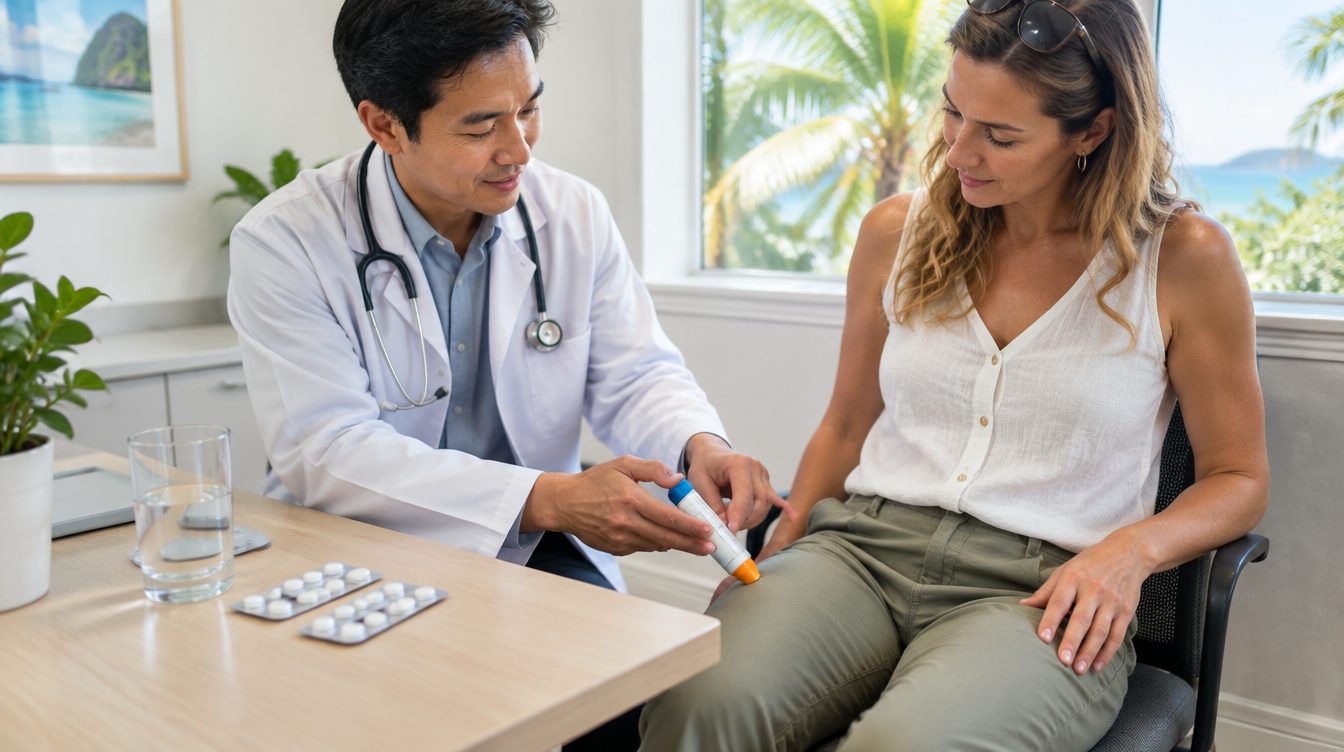
Anaphylaxis is a severe whole-body reaction affecting breathing, circulation or both, usually within minutes of a food, sting or medicine. Warning signs are tongue or throat swelling, a hoarse voice, noisy breathing or wheeze, faintness, pale clammy skin and collapse, with or without hives. The treatment is adrenaline (epinephrine) into the outer thigh muscle at the first breathing or circulation sign, not after waiting to see whether antihistamines work. Use your auto-injector, call 1669, and lie down with your legs raised, or sit up if breathing is hard; a second dose can follow after five minutes. Everyone who needs adrenaline should go to hospital, because symptoms can return hours later.
If you have had anaphylaxis before, travel with two in-date auto-injectors and keep them on you. Adrenaline degrades in heat, so never leave pens in a car, in beach sun or on a boat deck; an insulated pouch helps.
Stings, sunscreens and night markets
Bees, wasps, hornets and fire ants can cause large local swelling and, in allergic people, anaphylaxis; bites that are not allergic are covered under insect bite treatment. Jellyfish stings produce painful welts that look allergic but are a venom reaction handled differently, as our jellyfish sting treatment guide explains. New sunscreens, repellents and hotel toiletries can cause itchy contact dermatitis.
When to see a doctor
A rash that blisters or peels, with fever and sores in the mouth or eyes, days after starting a new medicine, may be Stevens-Johnson syndrome, a rare but serious drug reaction: stop the medicine and get hospital care the same day. Hay fever that stops you sleeping or triggers wheeze also deserves a review.
Prevention and early detection
Allergy prevention is avoidance plus preparation: know your triggers, use your Thai allergy card, and keep antihistamines in your day bag. Poorly controlled asthma raises the risk of severe food reactions, so keep taking your preventer. Early detection means acting on first signs: tingling lips or an itchy throat mid-meal is the moment to stop eating, take an antihistamine and watch closely. After any severe or unexplained reaction, see an allergist at home for skin prick or specific IgE blood tests and to discuss immunotherapy, gradual desensitisation to an allergen.
Getting allergy help at Takecare Clinic
For hives, hay fever or a reaction that is settling, walk in at any hour to the Bangtao (Cherngtalay) clinic, the Kata-Karon clinic or the Patong clinic, where you will usually be seen within minutes and treatment comes from our on-site pharmacy. Unsure whether to come in? Send photos of the rash on WhatsApp or call +66 81 718 9080. A doctor hotel visit in Phuket is available 24/7. We confirm the price on WhatsApp before your visit, bill most travel insurers directly and issue medical reports and itemised invoices. Anaphylaxis is always a 1669 call first.
Related services and treatments
People with hay fever often have asthma too, covered under asthma treatment. Post-nasal drip is often mistaken for infection, which our sore throat treatment and tonsillitis treatment guides help untangle, and a lingering night cough may be bronchitis. A streaming nose with fever and aches is more likely a virus: see flu treatment or COVID-19 treatment. Blocked ears after flights or dives are covered under ear infection treatment. See also our walk-in doctor in Phuket service and all the conditions we treat.
Summary
Most allergic reactions in Phuket are hay fever, hives or mild food reactions that settle with antihistamines. The danger sign is any throat, breathing or circulation symptom, which means adrenaline and 1669 without delay. Carry a Thai allergy card, keep auto-injectors cool and with you, and act on the first tingle during a meal.
“If you have ever had a severe allergic reaction, carry your adrenaline auto-injector at all times. Learn the Thai words for your allergy and show them when ordering food.”
Dr. Ponlawat Pitsuwan, Physician, Takecare Clinic Phuket
Frequently asked questions
I broke out in hives after a seafood dinner. Is it an allergy or bad fish?
Either is possible. A true shellfish or fish allergy affects only the allergic person and can recur with small amounts. Scombroid poisoning, from histamine in poorly stored fish, often affects several people who shared a dish and causes flushing, headache and a peppery taste. Both respond to antihistamines, but throat swelling or breathing trouble needs adrenaline and 1669.
Can I get an adrenaline auto-injector in Phuket?
Auto-injectors can be harder to find abroad than at home, so travelling with two is the safest plan. If yours is lost, used or out of date, a doctor can review your reaction history and prescribe a replacement where available. Ask us on WhatsApp whether one is in stock today, and keep any pen out of direct heat.
How is an allergy visit paid for, and can my insurer be billed?
Allergic reactions that begin on your trip are usually covered by travel insurance, subject to your policy terms and excess. We bill most travel insurers directly, and also provide receipts, a medical report and an itemised invoice for you to claim. We confirm the price on WhatsApp before your visit, including any medicines.
Do I need an appointment for hives or hay fever?
No. Our three clinics accept walk-ins around the clock and patients are usually seen within minutes, with most visits finished in under 30 minutes. If you are unsure whether a rash is allergic, send a clear photo on WhatsApp first. For throat swelling or breathing difficulty, do not come to the clinic: call 1669.
Can a doctor come to my hotel for an allergic reaction?
Yes, for reactions that are not life-threatening, such as widespread hives, swollen eyelids or severe hay fever. A doctor can visit your hotel, villa or condo anywhere in Phuket, 24/7, examine you and arrange treatment. With any sign of anaphylaxis, use adrenaline if you have it and call 1669 rather than waiting.
Will antihistamines make me too drowsy to ride a scooter?
Older sedating antihistamines such as chlorphenamine commonly cause drowsiness and slow reactions, so do not ride after taking them. Non-sedating ones such as cetirizine, loratadine and fexofenadine rarely do, although cetirizine affects a few people. Try a dose at the hotel before riding, and never combine antihistamines with alcohol on Phuket’s hilly roads.
Sources
The NHS explains common allergies and their treatment on its allergies page, and sets out emergency steps on its anaphylaxis page. MedlinePlus summarises allergens, tests and immunotherapy on its allergy overview.
Allergy, allergic reaction, hay fever, allergic rhinitis, food allergy, shellfish allergy, peanut allergy, scombroid poisoning, urticaria, hives, angioedema, anaphylaxis, adrenaline, epinephrine auto-injector, cetirizine, loratadine, fexofenadine, chlorphenamine, fluticasone, mometasone, IgE, skin prick test, immunotherapy, NHS, MedlinePlus, Bangtao, Cherngtalay, Kata, Karon, Patong, Takecare Clinic Phuket, Dr. Ponlawat Pitsuwan
This page is general health information and not a substitute for a medical consultation.