Medically reviewed by Dr. Ponlawat Pitsuwan, Physician, Takecare Clinic Phuket. Last reviewed: September 2026.
Urinary tract infections are among the most common problems I treat in women visiting Phuket. Heat, dehydration and long trips without a toilet all play a part. A quick urine test usually confirms the diagnosis, and most infections settle within a day or two of the right antibiotic.
Cystitis is one of those holiday complaints that tropical heat seems to invite. Sweating on the beach without drinking enough, holding on through a long boat trip with no toilet, and more sex than usual on a honeymoon all make it easier for bacteria to reach the bladder. Long-haul flights add dehydration and hours in a seat. Women are affected most, but men, older travellers and people with diabetes get UTIs too, and we treat them with extra care.
What a urinary tract infection is
The urinary tract runs from the kidneys down the ureters to the bladder and out through the urethra. Most UTIs start when bacteria from the bowel, usually E. coli, travel up the urethra into the bladder, causing cystitis. Women have a much shorter urethra, which is why they are affected far more often. If the infection climbs further to the kidneys it becomes pyelonephritis, a kidney infection, which is more serious.
Doctors separate uncomplicated from complicated UTIs. An uncomplicated UTI is a bladder infection in a woman who is not pregnant and has a normal urinary tract. Infections in men, in pregnancy, with a catheter or kidney stones, with poorly controlled diabetes or a weakened immune system count as complicated, and need a urine culture and often a longer course.
Symptoms, and what else it could be
A bladder infection typically brings burning or stinging when you pass urine, needing to go urgently and often, cloudy or strong-smelling urine, sometimes blood in the urine, and a dull ache low in the tummy. A kidney infection adds a temperature of 38°C or more, shivering, pain in the back or side just below the ribs, and nausea or vomiting. In older people, new confusion can be the only clue.
| Condition | Key clues | How we check |
|---|---|---|
| Bladder infection | Burning, urgency, frequency, lower tummy ache, no fever | Urine dipstick, culture if needed |
| Kidney infection | Fever, shivers, back or side pain, vomiting | Urine culture, blood tests |
| Chlamydia or gonorrhoea | Burning with discharge, a new partner, dipstick may be normal | NAAT urine or swab test |
| Vaginal thrush | Itching, soreness, thick white discharge | Examination, swab |
| Kidney stone | Waves of severe side pain spreading to the groin, blood in urine | Urine test, imaging |
If there is any chance of a sexually transmitted infection, we suggest STD testing in Phuket at the same visit, because chlamydia in particular can mimic cystitis closely.
How we test and treat a UTI
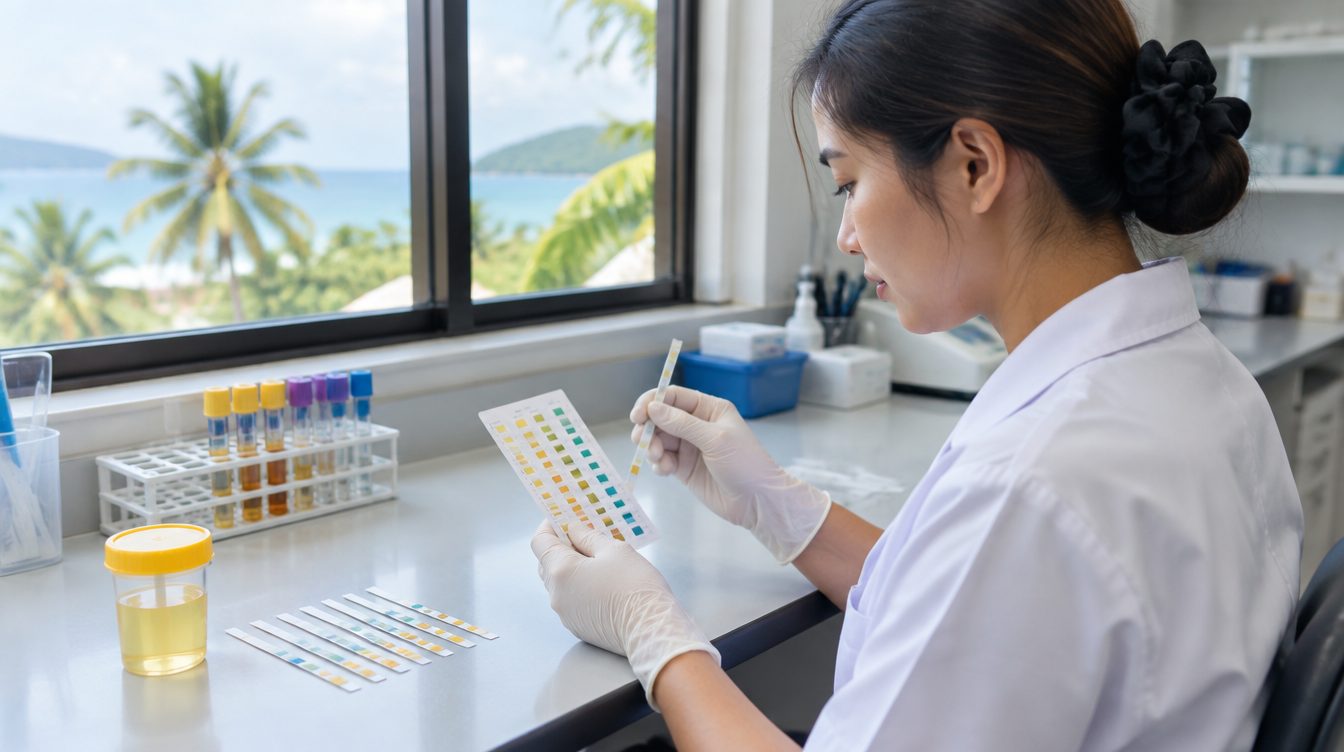
We ask about your symptoms, previous UTIs, allergies, any chance of pregnancy and, discreetly, recent sexual contact. A urine dipstick checks within minutes for nitrites, made by many bacteria, and leukocytes, the white cells that fight infection. A urine culture grows the bacteria and shows which antibiotics work; it takes 48 to 72 hours, so we reserve it for men, pregnancy, recurrent or kidney infections and treatment failure. With fever or back pain we add same-day blood tests for infection markers and kidney function.
For uncomplicated cystitis in women, common first-line choices are nitrofurantoin 100 mg modified-release twice daily for 3 days, the regimen in UK NICE guidance, or fosfomycin 3 g as a single dose, with pivmecillinam or trimethoprim as alternatives depending on local resistance. Men usually need 7 days, and pregnancy needs a culture and a pregnancy-safe choice. Kidney infection is different: nitrofurantoin and fosfomycin do not reach kidney tissue, so we use antibiotics such as cefalexin or co-amoxiclav for 7 to 10 days. Paracetamol or ibuprofen ease pain, and symptoms should improve within 48 hours.
Self-care while the antibiotics work
Drink enough water to keep your urine pale, pass urine whenever you feel the need, and rest in the shade or air-conditioning. A warm pack on the lower tummy eases cramping. Coffee and alcohol can irritate an inflamed bladder, so cut back for a few days. Cranberry juice is popular, but there is no good evidence that it treats an active infection. Finish the course you are prescribed, even once you feel better.
Heat, boats, flights and honeymoon cystitis
Phuket’s climate plays into UTIs in specific ways. In the heat you lose water through sweat, so urine becomes concentrated and the bladder is flushed less often. Island tours and long speedboat rides can mean hours without a toilet, and holding urine gives bacteria time to multiply. Sex is a common trigger, which is why cystitis early in a honeymoon is so familiar to doctors. If you fly home soon, start treatment before the flight, and do not fly with a fever or back pain until a doctor has checked you.
When to see a doctor
Some women with a first, mild episode improve with fluids alone, but most visitors are better served by a quick urine test and treatment. All men with urinary symptoms, pregnant women and children should be seen, as should anyone with blood in the urine, symptoms that are not improving after 48 hours of antibiotics, or a third infection in a year. A fever or pain in the back or side needs same-day assessment, and our fever treatment page explains how we approach high temperatures more generally.
Prevention and early detection
Aim for pale urine throughout the day, which in Phuket’s heat often means two to three litres or more. Do not hold on when you need to go, pass urine soon after sex, and wipe from front to back. Spermicide-coated condoms and diaphragms raise the risk for some women. After the menopause, vaginal oestrogen reduces recurrent UTIs, and NICE also lists preventive antibiotics for women with frequent infections. If you are prone to cystitis, carry home dipstick tests and start treatment at the first twinge, which stops a bladder infection climbing to the kidneys.
Getting tested and treated at Takecare Clinic
You can walk in 24/7 at the Bangtao (Cherngtalay) clinic, the Kata-Karon clinic or the Patong clinic, give a urine sample on arrival and usually leave with your antibiotics from our on-site pharmacy within 30 minutes. Message us on WhatsApp or phone +66 81 718 9080 if you would like us to expect you, and see our walk-in doctor in Phuket page for more detail.
If you are unwell with fever, a doctor hotel visit in Phuket brings the urine test and medicines to you. Direct billing is available with most travel insurers, and we hand you the receipt, medical report and itemised invoice any claim needs. We confirm the price on WhatsApp before your visit.
Related services and treatments
Visitors often ask about other everyday conditions we manage alongside UTIs. Our pages on migraine treatment, gout treatment and pink eye treatment cover three more common reasons travellers see us, and our full list of conditions we treat covers the rest.
Summary
A UTI is usually a bladder infection caused by bowel bacteria, and in women it typically clears quickly with nitrofurantoin or fosfomycin. Fever, back pain or vomiting signal a kidney infection needing different antibiotics and closer follow-up. In Phuket, heat, long trips without toilets and holiday sex all raise the risk, so drink steadily, do not hold on, and get tested early rather than waiting it out.
“Drink steadily through the day and never hold on for hours. Fever, back pain or vomiting with a UTI means you should be seen the same day.”
Dr. Ponlawat Pitsuwan, Physician, Takecare Clinic Phuket
Frequently asked questions
Is a UTI visit covered by travel insurance, and what will I pay?
A new infection on holiday is covered by most travel insurance policies, though excesses apply and recurrent problems may count as pre-existing, so check your policy. We direct-bill most travel insurers or give you a receipt, medical report and itemised invoice to claim. The cost depends on the tests and medicines you need, and we confirm the price on WhatsApp before your visit.
How soon after starting antibiotics will the burning stop?
Most people with a bladder infection notice real improvement within 24 to 48 hours, and symptoms are usually gone by the end of a 3-day course. A kidney infection takes a little longer, with the fever typically settling within two to three days. If you are not better after 48 hours, come back so we can check a urine culture.
Can I just walk in with cystitis, or should I book?
Just walk in; no booking is needed at any of our three clinics, day or night. Try not to pass urine in the hour before you arrive so you can give a sample straight away. The dipstick result is ready within minutes, and most people leave with treatment in under half an hour.
Can a doctor bring a urine test and antibiotics to my hotel?
Yes. Our doctors visit hotels, villas and condos across Phuket 24/7. The doctor examines you, runs a urine dipstick in your room, sends a culture if needed and supplies antibiotics directly. This is particularly useful if you have a fever and feel too unwell to travel, or if you are staying far from our clinics.
How can I tell whether it is a UTI or a sexually transmitted infection?
They can feel almost identical. Discharge, pain during sex, a new partner or a normal dipstick with ongoing burning all make an STI such as chlamydia or gonorrhoea more likely. A UTI tends to bring urgency, frequency and cloudy urine. When in doubt we test for both at the same visit, which avoids treating the wrong infection.
Is it safe to fly home with a UTI?
With a simple bladder infection and treatment already started, flying is generally fine. Drink well on the plane and choose an aisle seat so you can get up easily. Do not fly with a fever, shivering or back pain until a doctor has examined you, because a kidney infection can worsen quickly and is hard to manage at altitude.
Sources
The NHS guide to urinary tract infections covers symptoms, self-care and when to seek help. NICE guideline NG109 on lower urinary tract infection antimicrobial prescribing sets out the first-line antibiotics and course lengths used on this page. The NHS page on kidney infection describes the warning signs of an upper UTI.
urinary tract infection, UTI, cystitis, bladder infection, pyelonephritis, kidney infection, Escherichia coli, ESBL, nitrofurantoin, fosfomycin, pivmecillinam, trimethoprim, cefalexin, co-amoxiclav, urine dipstick, urinalysis, urine culture, chlamydia, gonorrhoea, vaginal thrush, NICE NG109, NHS, Bangtao, Kata, Karon, Patong, Takecare Clinic Phuket, Dr. Ponlawat Pitsuwan
This page is general health information and not a substitute for a medical consultation.