Medically reviewed by Dr. Ponlawat Pitsuwan, Physician, Takecare Clinic Phuket. Last reviewed: September 2026.
A fever in Phuket always makes me think about dengue as well as the usual viral infections, especially in the rainy season. Most fevers turn out to be self-limiting. Even so, I examine every feverish patient carefully and ask about mosquito bites, travel and how long the fever has lasted.
A fever on holiday in Phuket is rarely a mystery for long, but it is often misread at first. People put a sudden temperature down to too much sun, a big night in Patong or the long flight, and wait a day or two before seeking help. In this climate, the list of possible causes is wider than at home: the usual viral infections, plus dengue from day-biting mosquitoes, urine infections worsened by dehydration, skin infections from coral cuts, stomach bugs, and, after jungle trekking or waterfall swims, infections that most European doctors rarely see. We aim to identify the cause on the first visit, because the right treatment, and the painkillers you should avoid, depend on it.
What counts as a fever
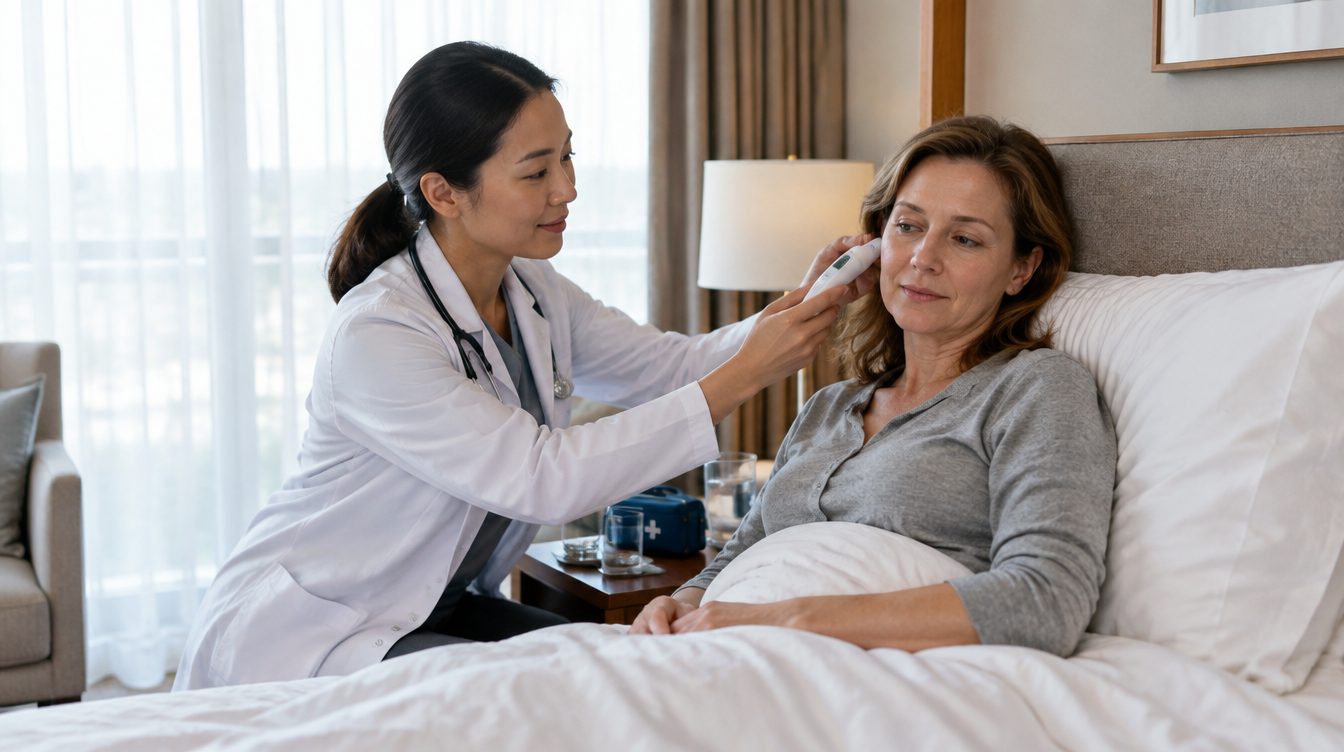
A temperature of 38°C or above is a fever. Ear and forehead thermometers are convenient but can read a little differently from an oral thermometer, so use the same device each time and note the reading and the time. A temperature in itself is the body’s response to infection, not the danger; what matters is the cause and how you are coping. Feeling hot after a day on the beach is not necessarily fever either. Heat exhaustion raises body temperature through heat and dehydration, not infection, and needs cooling and fluids rather than fever medicine.
Common causes of fever in Phuket
This table shows how doctors narrow down a fever in a tropical holiday setting. Many people have clues that point strongly to one line.
| Cause | Typical clues | Useful test | Usual treatment |
|---|---|---|---|
| Flu, COVID-19 and other viruses | Cough, sore throat, runny nose, ill travel companions | Flu or COVID swab | Rest and fluids; antivirals for some people |
| Dengue | Sudden high fever, pain behind the eyes, severe muscle and joint pain, rash | NS1 antigen, full blood count | Paracetamol only, fluids, monitoring |
| Urine or kidney infection | Burning urine, frequency, back or side pain | Urine dipstick and culture | Antibiotics |
| Gastroenteritis | Diarrhoea, vomiting, cramps after a suspect meal | Usually none; stool test if blood | Oral rehydration; azithromycin if severe |
| Skin infection (cellulitis) | Red, hot, spreading skin around a cut, bite or blister | Examination; blood count if unwell | Antibiotics |
| Tonsillitis or chest infection | Painful swallowing, or cough with phlegm and breathlessness | Examination, oxygen level | Antibiotics only if bacterial |
| Leptospirosis | After floodwater, muddy trails or freshwater swims; calf pain, red eyes | Blood tests | Doxycycline or other antibiotics |
| Scrub typhus | After rural or jungle trips; a small black scab called an eschar | Examination, blood tests | Doxycycline |
| Malaria | Recent time in forested border areas or other malaria countries | Rapid test or blood film, same day | Urgent treatment, often in hospital |
When a fever comes with body aches and no obvious source, dengue sits near the top of the list, and our page on dengue fever treatment explains how the illness unfolds. A fever with cough and aches in a group of travellers is often influenza, covered in detail under flu treatment. Burning urine with a temperature, especially with back pain, points to the urinary tract, described on our UTI treatment page.
How we assess and treat a fever
The examination
We check temperature, pulse, blood pressure, breathing rate and oxygen level, then ask the questions that matter in Phuket: which day the fever started, where you have been, what you ate, any animal, insect or water exposure, new sexual partners, and medicines you have taken. The doctor examines the throat, ears, chest, abdomen and skin, looking for rashes, an eschar, swollen glands or neck stiffness.
Tests, only when they change the plan
A full blood count and dengue NS1 are common first tests, alongside a urine dipstick; a CRP blood test, a marker of inflammation, helps separate viral from bacterial illness. A swab for flu or COVID, a malaria test after travel to risk areas, or a stool test may be added. Our blood tests in Phuket page describes these, and the dengue test in Phuket page explains why the day of fever decides which dengue test is used.
Treatment
For comfort, paracetamol is the safe first choice: for adults, 500 mg to 1 g every 4 to 6 hours, with no more than 4 g in 24 hours, and a lower limit for people under 50 kg or with liver disease. Until dengue has been excluded, avoid ibuprofen, aspirin and other anti-inflammatory painkillers, because they increase the risk of bleeding. Aspirin should never be given to anyone under 16. Antibiotics are prescribed only when the cause is bacterial, such as a urine infection, cellulitis or bacterial tonsillitis. If you cannot keep fluids down or are dehydrated, we may give fluids through a drip.
Looking after yourself while you wait
Rest in a cool, shaded or air-conditioned room, wear light clothing and sip fluids steadily: water, oral rehydration salts or diluted juice, enough to pass pale urine every few hours. Skip alcohol, which dehydrates and masks symptoms. Tepid sponging can make you feel more comfortable, but ice baths and cold showers can cause shivering that raises temperature further. Record your temperature, symptoms and the times you take paracetamol, which helps the doctor a great deal. Do not try to sweat a fever out in the sun.
When to see a doctor
In Phuket, see a doctor on the first or second day of any fever of 38°C or above, rather than waiting the three days often suggested at home, because early dengue testing and early treatment of bacterial infections change the outcome. Children need a lower threshold: under NICE guidance, a baby under 3 months with a temperature of 38°C or above, or aged 3 to 6 months with 39°C or above, needs urgent assessment. Pregnancy, diabetes, a weakened immune system and older age also mean coming in sooner.
Prevention and early detection
Several of Phuket’s fevers are preventable. Use repellent during the day as well as the evening, since dengue mosquitoes bite in daylight. Clean coral cuts, scratches and blisters promptly and keep them covered. Drink enough water in the heat, which helps prevent urine infections as well as heat exhaustion. Choose freshly cooked food served hot, and avoid swimming in floodwater or wading through muddy streams with open cuts. Stay up to date with flu vaccination, especially if you are older or have a long-term condition.
Seeing a doctor for fever at Takecare Clinic
Fevers often peak at night, and we are open 24/7 at all three clinics. Walk in to the Bangtao (Cherngtalay) clinic, our Kata-Karon clinic or the Patong clinic, where the on-site laboratory gives same-day results for common tests. If you would like to describe your symptoms or check the price first, message us on WhatsApp or call +66 81 718 9080.
When you feel too weak to travel, a doctor hotel visit in Phuket brings the assessment, blood samples and first treatment to your room. Fever caused by a new illness is normally covered by travel insurance; we offer direct billing with most travel insurers and provide receipts, a medical report and an itemised invoice. If you need hospital care, we arrange the referral.
Related services and treatments
If your symptoms are mild and you simply want a quick opinion, our walk-in doctor in Phuket service is the fastest route. You can browse other conditions we treat, from stomach upsets to skin infections.
Summary
A fever in Phuket deserves a cause, not just a painkiller. The likely causes range from flu and dengue to urine, skin and stomach infections, and less familiar ones such as leptospirosis and scrub typhus after rural trips. See a doctor within the first day or two, stick to paracetamol until dengue is ruled out, drink steadily, and treat a falling temperature with caution if you had body aches. Go to hospital or call 1669 at once for confusion, breathing difficulty, a non-fading rash or dengue warning signs.
“Use paracetamol rather than ibuprofen or aspirin for a fever in Thailand until dengue has been ruled out, and drink plenty of fluids.”
Dr. Ponlawat Pitsuwan, Physician, Takecare Clinic Phuket
Frequently asked questions
Will travel insurance cover a doctor visit for my fever?
Fever from a new illness during your trip is the kind of problem travel insurance is designed for, so the consultation, tests and medicines are usually covered, subject to your policy’s excess and terms. We offer direct billing with most travel insurers and give you receipts, an itemised invoice and a medical report. If you are paying yourself, we confirm the price on WhatsApp before your visit.
How quickly can you find out what is causing my fever?
Often during the first visit. The history and examination point to a likely cause, and common tests such as a blood count, dengue NS1 and urine dipstick come back the same day from our on-site laboratory, usually within a few hours. Some infections, such as dengue with an early negative result, need a repeat test a day or two later.
Do I need to book before coming in with a fever?
No. You can walk in to any of our three clinics at any time of day or night, and most people are seen within minutes. If you have a high fever with severe symptoms such as confusion, breathing difficulty or a non-fading rash, skip the clinic and call 1669 or go to a hospital emergency department instead.
Can a doctor come to my hotel if I have a high temperature?
Yes. Our doctors visit hotels and villas anywhere in Phuket, 24 hours a day. The doctor examines you, takes blood or urine samples for our laboratory, and starts treatment in your room. If anything suggests you need hospital care, the doctor will tell you straight away and help arrange it, so you do not lose time.
Is ibuprofen safe for a fever in Phuket?
Not until dengue has been ruled out. Ibuprofen, aspirin and similar anti-inflammatory painkillers can increase bleeding in dengue, which is common in Phuket. Paracetamol is the safer choice, at up to 1 g every 4 to 6 hours for adults, with no more than 4 g in 24 hours. Once a doctor has excluded dengue, ibuprofen may be fine.
How can I tell heat exhaustion from a fever caused by infection?
Heat exhaustion follows time in the sun or hard exercise, with heavy sweating, dizziness, headache and nausea, and it improves within about 30 minutes of cooling down, resting and drinking. A fever from infection persists despite cooling and often comes with chills, aches or other symptoms. Confusion, or hot dry skin with collapse, suggests heatstroke and needs 1669.
Sources
The NHS page on high temperature in adults explains home care and when to get help. The NHS guide to sepsis lists the emergency warning signs. NICE guideline NG143 on fever in under 5s sets the age-based thresholds for children.
fever, high temperature, pyrexia, febrile illness, tropical fever, dengue, influenza, COVID-19, urinary tract infection, pyelonephritis, gastroenteritis, cellulitis, tonsillitis, chest infection, leptospirosis, scrub typhus, eschar, malaria, heat exhaustion, heatstroke, sepsis, paracetamol, ibuprofen, aspirin, doxycycline, azithromycin, full blood count, CRP, NS1 antigen, urine dipstick, NICE NG143, NHS, Bangtao, Cherngtalay, Kata, Karon, Patong, Takecare Clinic Phuket, Dr. Ponlawat Pitsuwan
This page is general health information and not a substitute for a medical consultation.