Medically reviewed by Dr. Ponlawat Pitsuwan, Physician, Takecare Clinic Phuket. Last reviewed: September 2026.
Many of my stitch removals are for travellers who were stitched up at home or elsewhere in Thailand before heading to Phuket. Removal is quick, but timing matters, because stitches left in too long can scar while those removed too early can let the wound reopen.
Many of the stitches we remove in Phuket were put in somewhere else: at a hospital after a scooter fall, at another island clinic after a coral cut, or at a surgical centre after a planned procedure. We often meet the wound for the first time on removal day, so we start by checking how it has healed rather than simply snipping. Timing is the other common question, because holidays rarely line up neatly with the 5 to 14 days most stitches need. This page covers when stitches should come out, what happens on the day and how to protect the scar in tropical sun.
When stitches are ready to come out
The right day depends mostly on blood supply and skin tension. Areas with a rich blood supply, such as the face, heal fast, and early removal there reduces the small track marks stitches can leave. Skin that stretches with movement, over joints, the back or the legs, needs longer before it can hold together unaided. The table shows the usual ranges; the doctor who placed your stitches may have given you a specific date, and that should take priority.
| Body area | Usual time to removal | Notes |
|---|---|---|
| Face | 3-5 days | Early removal limits marks; strips often added for support |
| Scalp | 7-10 days | Staples are common here |
| Chest, abdomen, arms, hands | 7-10 days | Longer after surgery with a large incision |
| Back | 10-14 days | Skin tension is high when you bend |
| Legs and feet | 10-14 days | Slower healing, especially with diabetes |
| Over joints (knee, elbow, knuckles) | 10-14 days | Movement pulls on the wound, so patience pays |
What happens at the removal appointment
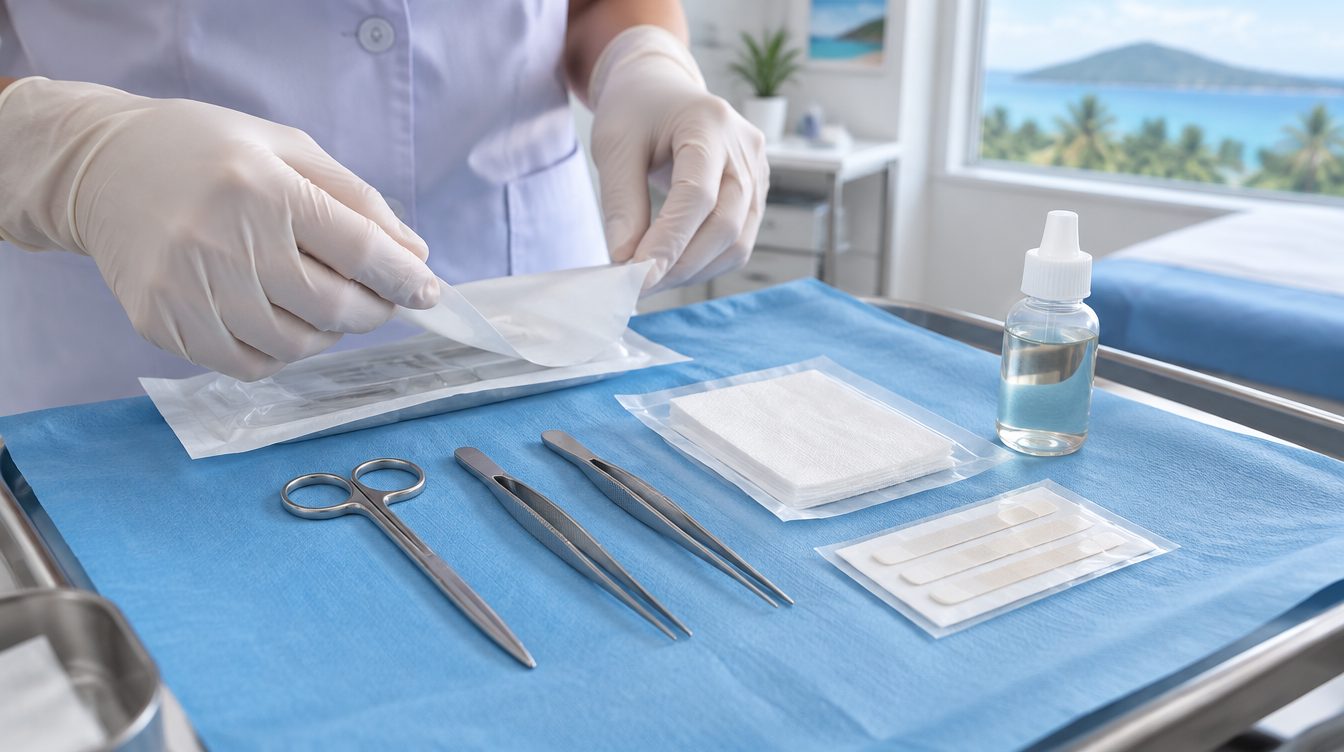
First we look at the wound. The edges should be sealed along the whole length, with no gap, no pus and only a faint pink line. We clean the area with antiseptic, lift each knot gently with fine forceps, cut the thread just beneath the knot, close to the skin, and draw the stitch out so that no part that sat on the surface is pulled through the wound. Most people feel a light tug rather than pain, and no anaesthetic is needed. We count the stitches as they come out, because a forgotten one can irritate or become infected. Adhesive skin closure strips are often placed afterwards to support the scar for a few more days, and the whole visit usually takes a few minutes.
If the wound is not quite ready
Sometimes a wound has healed well at one end and less well at the other. In that case we may remove every second stitch and ask you back in a day or two for the rest. If there are signs of infection, we treat that first, which may mean taking a swab and starting an antibiotic, before deciding on timing. Our page on skin infection treatment explains the warning signs in more detail.
Dissolvable stitches, staples and skin glue
Dissolvable, or absorbable, stitches are often used inside the mouth, under the skin surface and after some operations. Depending on the material, they break down over one or two weeks to several months, and they do not need removal. Occasionally a stiff knot end pokes out and catches on clothing; we can trim it in seconds. Staples, used mainly on the scalp and after some surgery, are removed with a small sterile tool that bends each one open. Skin glue needs nothing at all: it flakes away by itself over about 5 to 10 days, and picking at it or applying creams can make it lift too early.
Flying home before your stitches are due
If your flight leaves before the removal date, it is usually better to have the stitches taken out at home than too early here, because a wound that opens after early removal can leave a wider scar. We give you a short letter stating when and where the stitches were placed, how many there are, the type of material and the planned removal date, so a nurse or doctor at home knows exactly what to do. If you are having a wound closed and already know you are leaving soon, tell the doctor, who may choose dissolvable stitches or skin glue instead.
Protecting the new scar in Phuket sun
A fresh scar has no protection against ultraviolet light and can darken permanently if it burns, a problem called post-inflammatory hyperpigmentation. Cover the scar with clothing or a plaster when you are outdoors, and once the skin has closed, apply a broad-spectrum sunscreen of SPF 30 or higher every few hours. Keep this up for at least a year, as scars take many months to mature. Once the wound is fully healed, gentle massage with an unperfumed moisturiser and silicone gel or sheets can help the scar flatten and soften. People with darker skin or a history of raised scars (keloids) should mention it, because early silicone treatment may help.
When to see a doctor
Come in before the planned removal date if the wound becomes more painful, swollen or hot, if redness spreads outward from the edges, if it leaks pus or smells, or if a stitch has cut through the skin or the wound edges are separating. A fever, or red streaks running up the arm or leg, suggest the infection is spreading and needs attention the same day. Call 1669 or go to a hospital emergency department if a wound bursts open and bleeds heavily, if you feel very unwell with a high fever, fast heartbeat or confusion, or if a surgical wound on the abdomen opens.
Prevention and early detection
Most problems at removal time start with the days before it. Keep the stitches dry for the first 24 to 48 hours, then shower briefly and pat them dry, but keep them out of the sea, pools and hot tubs until they are out and the line has closed. Avoid heavy lifting, deep stretching or yoga poses that pull on a back or joint wound. Do not pick at scabs, and do not try to remove stitches yourself, as leftover fragments and reopened edges are common results. Smoking and diabetes slow healing, so people in either group may need a day or two longer. Looking at the wound once a day in good light is the easiest way to catch trouble early.
Having your stitches taken out with us
Takecare Clinic Phuket removes stitches 24 hours a day at the Bangtao (Cherngtalay) clinic, the Kata-Karon clinic and the Patong clinic. Just walk in, message us on WhatsApp with a photo of the wound and your paperwork, or call +66 81 718 9080. Seeing a walk-in doctor in Phuket is quickest for most people, and if moving is difficult, a doctor hotel visit in Phuket brings a sterile kit to your room. Direct billing is available with most travel insurers, and our receipt and medical report can go in with the paperwork from the original injury.
Related services and treatments
If you have a new cut that needs cleaning or closing, see our page on wound care in Phuket. For injuries from a fall on the road, motorbike accident care covers what else to check. Planned procedures such as cyst removal are described under minor surgery in Phuket, and simple procedures like ear wax removal are also done in our treatment rooms. You can view all our medical services here.
Summary
Stitches usually come out after 3 to 5 days on the face and up to 14 days on the legs, back and over joints. Removal is quick and rarely painful, but checking the wound first matters, especially when the stitches were placed elsewhere. If you are flying before the due date, take a letter and have them removed at home. The practical takeaway: keep stitches dry and out of the sea, note your removal date, and protect the new scar from the sun for a year.
“Bring any paperwork from where you were stitched. Knowing the date and type of stitches tells me exactly when they are ready to come out.”
Dr. Ponlawat Pitsuwan, Physician, Takecare Clinic Phuket
Frequently asked questions
Does having stitches removed hurt?
Very rarely. Most people feel a brief tug or tickle as each stitch slides out, and no anaesthetic is needed. It can feel a little sore if a scab has grown over a stitch, in which case we soften it with saline first. The whole process usually takes a few minutes.
Can you remove stitches that a hospital or another clinic put in?
Yes, this is very common. Bring any discharge notes or instructions so we know the date, type of stitch and planned removal day. After larger operations, or when there is a drain or a special closure, your surgeon’s instructions come first and we may advise returning to them.
Is it safe to leave stitches in longer than planned?
A day or two late is rarely a problem, but stitches left in much longer can leave cross-hatched marks along the scar and occasionally become irritated or infected. If you cannot reach a clinic on the planned day, come as soon as you can or ask for a hotel visit.
Do I need an appointment for stitches removal?
No. All three clinics accept walk-ins 24/7, and removal is one of the quickest visits we do. Sending a photo on WhatsApp beforehand can be useful if you are unsure whether the wound is ready, and we confirm the price before your visit.
Can a doctor remove my stitches at my hotel or villa?
Yes. A doctor can come to you anywhere in Phuket, day or night, with a sterile removal kit and dressings. This suits people with leg or foot wounds, families with children who are more relaxed at home, or anyone with a busy schedule of tours.
Will my insurance cover the removal visit?
If the original injury or procedure was covered, follow-up care, including stitch removal, is usually part of the same claim. Keep the earlier treatment documents together with our receipt. We offer direct billing with most travel insurers and confirm the price on WhatsApp before your visit.
Sources
The NHS explains how scars form and which treatments help on its scars page, and describes the signs of a spreading skin infection on its cellulitis page. MedlinePlus gathers patient guidance on healing and aftercare under wounds and injuries.
stitches removal, suture removal, sutures, absorbable sutures, dissolvable stitches, surgical staples, skin glue, tissue adhesive, adhesive skin closure strips, wound dehiscence, wound infection, cellulitis, scar care, hyperpigmentation, keloid, silicone gel, sunscreen, 1669, Bangtao, Kata, Karon, Patong, Takecare Clinic Phuket, Dr. Ponlawat Pitsuwan
This page is general health information and not a substitute for a medical consultation.