Medically reviewed by Dr. Ponlawat Pitsuwan, Physician, Takecare Clinic Phuket. Last reviewed: September 2026.
Phuket is often a starting point rather than a final destination, and many of the travellers I advise are heading on to jungle treks, other countries or remote islands. I tailor advice to the next leg of the trip, because the risks in Phuket are quite different from those on the Myanmar border or in Laos.
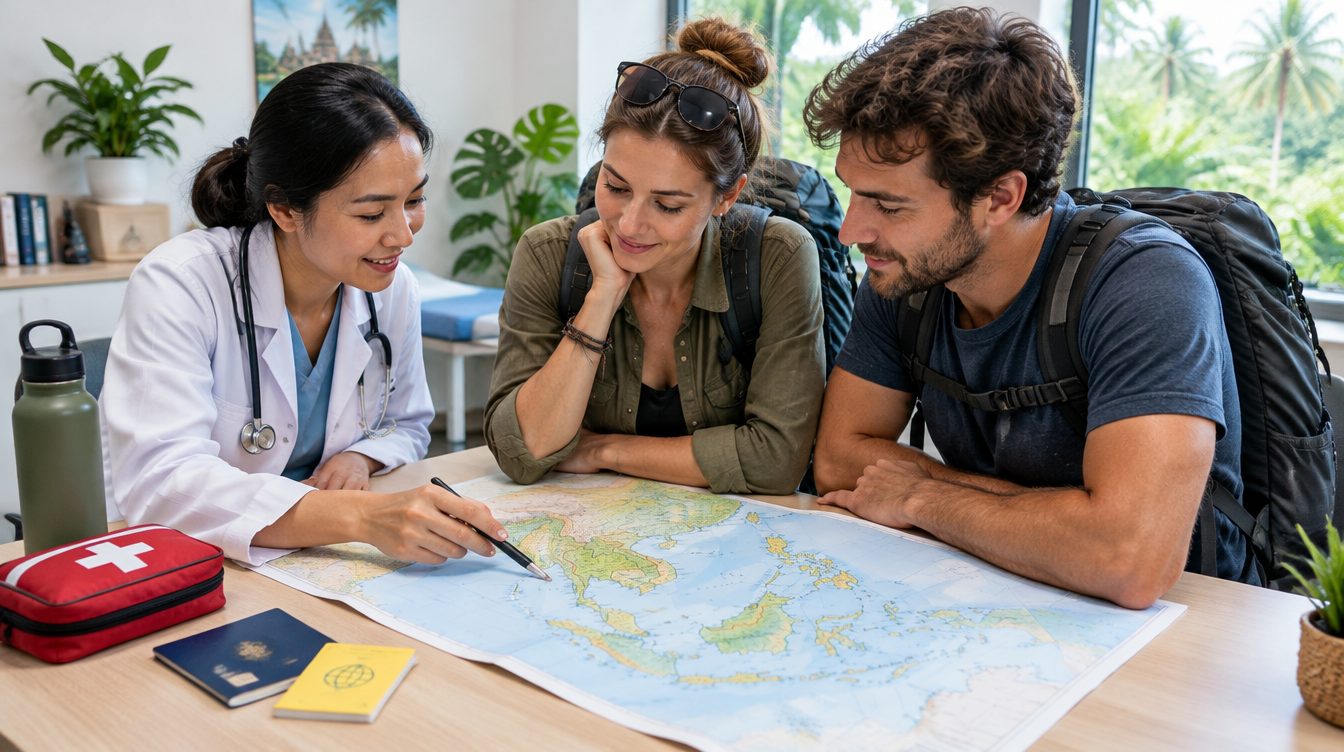
Phuket is rarely the last stop. Many of the travellers we see are between legs: a liveaboard to the Similan Islands next week, a flight to Kathmandu for a trek, a slow loop through Cambodia and Laos, or a return home after months in Asia. Others live here and travel out regularly. The questions tend to arrive late, sometimes the night before departure, and they are practical: do I need malaria tablets, what if I get altitude sickness, what should be in my bag if I am three days from a doctor? A single focused consultation can answer them, and because we are open around the clock, late is still better than never.
Who benefits from a travel medicine visit
The consultation is most useful for backpackers on multi-country routes, divers heading to remote liveaboards, trekkers bound for high altitude, long-stay residents planning regional trips, families with young children, pregnant travellers, and anyone with a long-term condition such as diabetes, heart disease or asthma who will be crossing time zones or travelling far from hospitals. It suits people who have already been travelling for months, too, because a mid-trip review often catches missed vaccine doses and medicines that are running low.
What the consultation covers
We start with your itinerary: countries and regions, cities or countryside, season, accommodation, activities and how far you will be from medical care. From that, the doctor builds a plan in several parts. Vaccines are checked against the destinations, and anything due can often be given the same day; our vaccinations in Phuket page lists what is relevant in the region, and the rabies vaccine in Phuket page explains why pre-exposure doses are worth considering for rural or remote trips. We then go through malaria, altitude, food and water, insects, sun and heat, sexual health, safe transport and your regular medicines. You leave with written advice and, where needed, prescriptions for your kit.
Malaria: where the risk is and which tablets
Phuket, Bangkok, Chiang Mai, Koh Samui and Koh Phangan do not need antimalarial tablets under CDC advice; mosquito bite avoidance is enough. Elsewhere in Thailand, the risk is concentrated in forested provinces along the borders with Myanmar, Cambodia and Laos, such as Tak, Kanchanaburi and Ranong, so a border run or jungle trek changes the advice. Beyond Thailand, parts of Cambodia, Laos, Myanmar, Indonesia, Papua New Guinea, India and much of sub-Saharan Africa carry higher risk, and the right choice depends on the exact region and on local drug resistance. When tablets are advised, these are the usual options.
| Medicine | How it is taken | Start | Continue after leaving | Points to know |
|---|---|---|---|---|
| Atovaquone-proguanil | Once daily with food | 1 to 2 days before entering the area | 7 days | Well tolerated; suits short trips |
| Doxycycline | Once daily, upright, with water and food | 1 to 2 days before | 4 weeks | Makes skin burn easily in the sun; not in pregnancy or young children |
| Mefloquine | Once weekly | 2 to 3 weeks before | 4 weeks | Resistance along Thailand’s borders; can affect mood and sleep |
No tablet is fully protective, so bite avoidance still matters from dusk to dawn, when the mosquitoes that carry malaria feed. Any fever within a year of leaving a malaria area, and especially in the first three months, needs a same-day malaria test, and you should tell the doctor where you have been.
Going high: altitude sickness
Acute mountain sickness can start above about 2,500 metres, with headache, nausea, dizziness, tiredness and poor sleep. The guideline rule for prevention is to climb slowly: above 3,000 metres, avoid raising your sleeping altitude by more than 500 metres a day, and take a rest day every three to four days. Where a fast ascent cannot be avoided, acetazolamide, typically 125 mg twice a day starting the day before the climb, reduces the risk. It causes tingling fingers and makes fizzy drinks taste flat, and it is not suitable for everyone, so the doctor checks your medicines and allergies first. Coming from sea level in Phuket straight to a high-altitude airport such as Lhasa or Cusco is one of the riskier starts.
A medical kit that earns its space
For most routes, pack paracetamol, oral rehydration salts, an antihistamine, hydrocortisone 1% cream, antiseptic, plasters and a few dressings, a thermometer, sunscreen of SPF 30 or more, and an insect repellent with 20 to 50 percent DEET or about 20 percent picaridin. Ferry crossings and liveaboards call for motion-sickness tablets. For remote travel, the doctor may prescribe standby azithromycin for severe diarrhoea; in Southeast Asia it is preferred over ciprofloxacin because Campylobacter bacteria are often resistant to that group of antibiotics. Oral rehydration comes first, and our page on traveller’s diarrhoea treatment explains when antibiotics help.
Carry regular medicines in hand luggage, with one to two weeks extra and the original packaging. Some medicines, including strong painkillers, sleeping tablets and ADHD stimulants, are controlled in Thailand and neighbouring countries, so travel with a prescription or doctor’s letter and check each country’s rules before you go.
Flights, dives and paperwork
On long-haul flights, walk the aisle every hour or two, do calf exercises, drink water and limit alcohol. People at higher risk of blood clots, such as those with a previous clot, recent surgery or pregnancy, may benefit from compression stockings. Divers should follow the Divers Alert Network guidance of at least 12 hours before flying after a single no-decompression dive, and at least 18 hours after multiple dives or several days of diving. Airlines usually want a medical letter for pregnancy beyond about 28 weeks and after recent surgery or serious illness, and requirements vary by airline, so check yours; we can issue a fit-to-fly certificate after an assessment. Read your insurance policy for exclusions too: many limit trekking altitude or dive depth, and many exclude motorbike accidents if the rider has no valid motorcycle licence or no helmet.
When to see a doctor
During or after a trip, some symptoms need prompt care: any fever after visiting a malaria area, a high fever with severe headache and body aches that could be dengue, diarrhoea with blood or signs of dehydration, and any animal bite or scratch. Mosquito-borne fevers are common in the region, and our dengue fever treatment page explains the warning signs to watch for.
Prevention and early detection
The best time for travel advice is 4 to 8 weeks before departure, so vaccine courses and malaria tablets can start on time, but a consultation the day before still helps. Protect yourself from daytime and night-time mosquitoes, eat food that is freshly cooked and served hot, drink sealed or treated water, use condoms with new partners, and avoid touching animals. On return, tell any doctor you see about your travel for at least a year, because malaria and some other tropical infections can appear late.
Booking a travel health consultation with us
Takecare Clinic is open 24/7 at three sites, so you can come in whenever your plans firm up. Walk in to our Bangtao (Cherngtalay) clinic, the Kata-Karon clinic or the Patong clinic with your itinerary, vaccination record and a list of your medicines. Sending your route on WhatsApp beforehand lets the doctor prepare, and lets us check whether any vaccine you need is in stock today and confirm the price. You can also phone +66 81 718 9080.
If you are short of time before a flight, a doctor hotel visit in Phuket brings the consultation to you. Pre-travel advice is not usually covered by travel insurance, but treatment for illness during your trip generally is; we provide receipts, a medical report and an itemised invoice, with direct billing for most travel insurers.
Related services and treatments
If a bite or scratch has already happened, go straight to our guide on animal bite treatment. For any new symptom during your stay, our walk-in doctor in Phuket service is available at all hours, and everything else is listed under all our medical services.
Summary
Travel medicine in Phuket is about the trip after this one. Bring your route and records, and the doctor will match vaccines, decide whether you need malaria tablets and which suit you, plan altitude safety, and help build a kit with standby treatment and enough of your regular medicines. Know the red flags for malaria, altitude illness and blood clots, check your insurance for activity exclusions, and remember that a fever up to a year after a malaria area is a reason to get tested the same day.
“Tell me your full itinerary, not just Phuket. Malaria, altitude and vaccine advice depend entirely on where you are going next.”
Dr. Ponlawat Pitsuwan, Physician, Takecare Clinic Phuket
Frequently asked questions
Will insurance pay for a travel medicine consultation?
Pre-travel advice, preventive prescriptions and routine vaccines are usually not covered by travel insurance, which is designed for sudden illness and injury. Some international health plans for expats include preventive care, so check yours. We confirm the price on WhatsApp before your visit and provide receipts and an itemised invoice either way, with direct billing where cover applies.
How far ahead of my next trip should I come in?
Four to eight weeks before departure is ideal, because some vaccines need several doses and some malaria tablets, such as mefloquine, start two to three weeks before entering a risk area. If you are leaving in a few days, come anyway. Atovaquone-proguanil and doxycycline start only a day or two before, and many single-dose vaccines still help at short notice.
Can I walk in with my itinerary, or should I send it first?
You can walk in to any of our clinics at any hour and most people are seen within minutes. Sending your itinerary on WhatsApp first is useful, especially for complex routes, because the doctor can check country-specific malaria and vaccine advice in advance, and we can tell you whether the vaccines you are likely to need are in stock today.
Can the doctor do the consultation at my hotel?
Yes. A doctor can visit your hotel or villa anywhere in Phuket, day or night, to go through your itinerary, check records, and write prescriptions for malaria tablets, altitude medicine or standby treatment. This is handy the evening before an early flight or for families. Some vaccines may need a clinic visit, so ask on WhatsApp when you book.
Do I need malaria tablets while staying in Phuket?
No. Under CDC advice, Phuket, like Bangkok and Chiang Mai, does not need antimalarial tablets; avoiding mosquito bites is enough. In Thailand, malaria risk is mostly in forested provinces along the borders with Myanmar, Cambodia and Laos, so tell the doctor about any border trip or jungle trek. Dengue is the bigger mosquito-borne concern in Phuket, prevented by daytime repellent, not tablets.
What should a medical kit include for a liveaboard or a trek?
Beyond basics such as paracetamol, rehydration salts, antihistamine, antiseptic, dressings and repellent, a liveaboard kit needs motion-sickness tablets, drops for swimmer’s ear if the doctor advises them, and a long-sleeved rash guard for sun protection. A trekking kit may add acetazolamide, blister care and water purification. For both, standby azithromycin for severe diarrhoea is worth discussing, together with enough of your usual medicines.
Sources
The CDC Thailand travel health page details malaria areas and recommended medicines by region. The NHS guide to malaria covers prevention tablets and symptoms after travel. The NHS page on altitude sickness explains safe ascent rates and warning signs.
travel medicine, travel health consultation, pre-travel advice, malaria prophylaxis, atovaquone-proguanil, doxycycline, mefloquine, acute mountain sickness, high-altitude pulmonary oedema, high-altitude cerebral oedema, acetazolamide, traveller’s diarrhoea, azithromycin, oral rehydration salts, DEET, picaridin, deep vein thrombosis, jet lag, flying after diving, Divers Alert Network, fit to fly, CDC, NHS, WHO, Similan Islands, Bangtao, Cherngtalay, Kata, Karon, Patong, Takecare Clinic Phuket, Dr. Ponlawat Pitsuwan
This page is general health information and not a substitute for a medical consultation.