Medically reviewed by Dr. Ponlawat Pitsuwan, Physician, Takecare Clinic Phuket. Last reviewed: September 2026.
Chlamydia is one of the infections I diagnose most often in younger travellers, and many of them had no symptoms at all. It is easily treated, but it is also easily passed on, so I always talk about partners and retesting as well as the antibiotics.
Chlamydia is one of the infections we find most often, and it frequently turns up in people who came in for something else: a check before flying home, a message from a partner who tested positive, or stinging on urination that they assumed was cystitis from the heat. Most people with chlamydia feel nothing at all, which is exactly why it passes so easily between travellers. It is simple to test for and reliably cured. The parts that need care are timing the test, choosing an antibiotic that suits a beach holiday, and making sure partners are treated too.
What chlamydia is and how it passes between people
Chlamydia is caused by the bacterium Chlamydia trachomatis. It infects the cervix, the urethra, the rectum and, less often, the throat and eyes. It spreads through vaginal, anal and oral sex, through genital contact without penetration, and on shared sex toys. It does not spread through toilet seats, swimming pools, the sea or shared towels. Because it can sit silently for months, a positive result does not necessarily point to your most recent partner, which is worth knowing before any difficult conversation.
Symptoms, and conditions that can look the same
When symptoms do appear, women may notice a change in vaginal discharge, bleeding after sex or between periods, pain on passing urine or a dull lower abdominal ache. Men may have a clear or cloudy discharge from the penis, burning when passing urine, or pain and swelling in a testicle. Rectal infection can cause discomfort, discharge or bleeding, and throat infection is usually silent. Several other conditions produce similar complaints, so a test rather than a guess is the way forward.
| Condition | Typical clues | How we tell it apart |
|---|---|---|
| Chlamydia | Often no symptoms; mild discharge or burning | NAAT on urine or swab |
| Gonorrhoea | Thicker yellow-green discharge, often within a few days of sex | NAAT from the same sample; culture for resistance |
| Cystitis (bladder infection) | Frequency, urgency, cloudy urine, no discharge | Urine dipstick and culture |
| Bacterial vaginosis | Thin grey discharge with a fishy smell, little itching | Vaginal pH and microscopy |
| Thrush | Thick white discharge, itching and redness | Examination and swab |
| Mycoplasma genitalium | Urethritis that persists after treatment | A specific NAAT for this organism |
A bladder infection needs a different antibiotic, and our UTI treatment page explains how it is managed. A fishy-smelling discharge without itching is usually bacterial vaginosis, covered under BV treatment.
How we test for chlamydia
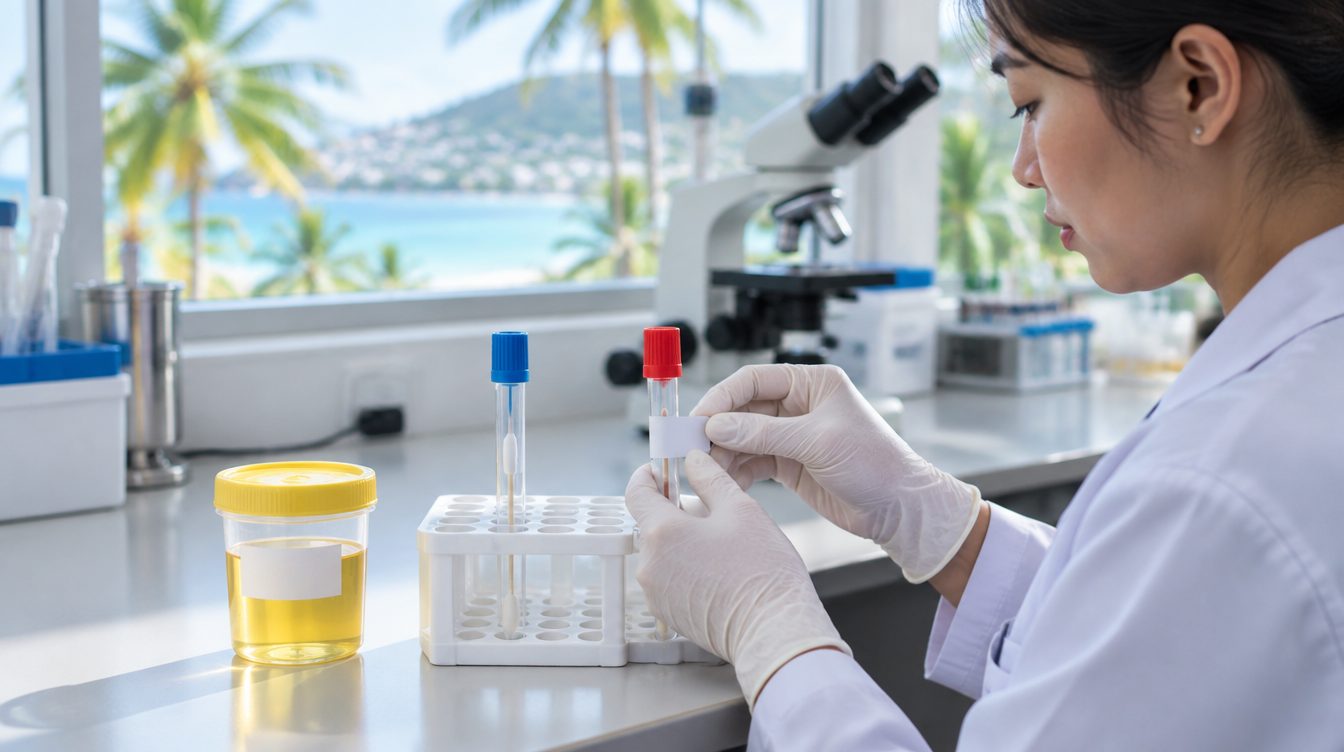
The recommended test is a NAAT (nucleic acid amplification test), which detects the genetic material of the bacteria and is very accurate. Men give a first-catch urine sample, the first part of the stream, ideally an hour or more after last passing urine. Women take a lower vaginal swab in private. If you had anal or oral sex, rectal and throat swabs are added, because a urine test cannot find infection at those sites. Gonorrhoea is tested on the same sample. The test becomes reliable about two weeks after the contact, although symptoms are a reason to test and treat earlier. We usually suggest adding HIV and syphilis tests, and our STD testing in Phuket page explains how the full panel is timed.
Antibiotics that cure chlamydia
The first-line treatment in current UK and US guidelines is doxycycline 100 mg twice a day for 7 days. It is more effective than a single dose of azithromycin, particularly for rectal infection. If you are pregnant, breastfeeding or cannot take doxycycline, azithromycin is used instead, either as a single dose or as a three-day course depending on the guideline followed. If you have symptoms, or a partner has tested positive, we can start treatment the same day rather than waiting for your own result.
One variant needs longer treatment. Lymphogranuloma venereum (LGV) is a more invasive strain that mainly affects the rectum in men who have sex with men, causing pain, discharge and bleeding. It is treated with doxycycline for 21 days, so tell the doctor about rectal symptoms.
Taking doxycycline under the Phuket sun
Doxycycline makes skin more sensitive to sunlight, so sunburn can happen faster and more severely than usual. Use a high-factor sunscreen, cover up, and avoid long midday exposure on boat trips and beaches while you take it. Swallow each capsule with a full glass of water while sitting or standing, and not just before lying down, because it can irritate the gullet. Take it with food if it upsets your stomach, and keep it apart from antacids, iron and calcium supplements by a few hours. If you are already taking doxycycline to prevent malaria, tell us: the preventive dose is not enough to treat chlamydia, so the plan needs adjusting.
After treatment: sex, partners and retesting
Avoid sex, including oral sex and sex with condoms, until you have finished the 7-day course and your partners have been treated too. After azithromycin, wait 7 days from the start of treatment. Anyone you had sex with in the previous six months should be tested and treated, even without symptoms; if that feels awkward, we can give you a short letter to pass on. A routine test of cure is not needed after doxycycline, but it is advised in pregnancy, after azithromycin for rectal infection, and if symptoms persist. Because reinfection is common, a repeat test about three months later is a good idea.
What happens if chlamydia goes untreated
In women, chlamydia can spread upwards and cause pelvic inflammatory disease (PID), which scars the fallopian tubes and raises the risk of ectopic pregnancy, long-term pelvic pain and infertility. In men, it can cause epididymo-orchitis, a painful swelling of the tube behind the testicle. In both, it can trigger reactive arthritis, with painful joints and sore eyes. During pregnancy it can pass to the baby at birth, causing eye infection or pneumonia. Treatment prevents all of these, which is why testing without symptoms is worthwhile.
When to see a doctor
Come in if you have discharge, burning or bleeding after sex, if a partner has tested positive, or if symptoms have not settled a week after finishing antibiotics. Lower abdominal pain with fever or pain during sex needs prompt assessment for PID. A painful, swollen testicle also needs same-day review.
Prevention and early detection
Condoms and dental dams used for every type of sex, including oral sex, are the most effective protection. Screening finds silent infections before they cause damage: guidelines advise sexually active women under 25 to test every year and with each new partner, and anyone to test after condomless sex with a new partner. People on PrEP are usually screened every three months. Retesting three months after treatment catches reinfection early, and making sure partners are treated stops the infection bouncing back.
Being seen for chlamydia at our clinics
Each of our three clinics runs around the clock with no appointment system, so you can come whenever suits you. Head to the Bangtao (Cherngtalay) clinic on Bandon Road, the Kata-Karon clinic on Kedkwan Road, or our Patong clinic. You can message the team on WhatsApp about sample timing, or call us on +66 81 718 9080. Our walk-in doctor in Phuket usually sees people within minutes, and antibiotics come from the on-site pharmacy before you leave.
If you would rather stay in, a doctor hotel visit in Phuket can be arranged at any hour. We confirm the price on WhatsApp before your visit. When you have symptoms, many travel insurers can be billed directly, and for other plans we give you an itemised invoice and a doctor’s report to claim yourself.
Related services and treatments
Chlamydia often travels with other infections. If there was a possible HIV exposure in the last 72 hours, PEP treatment in Phuket should come first, and an HIV test in Phuket at the right time completes the picture. If you want ongoing HIV protection, ask about our PrEP clinic in Phuket. Genital sores are covered under herpes treatment, and blisters on the lip under cold sore treatment. You can also explore the full list of conditions we treat.
Summary
Chlamydia is common, usually silent and reliably cured. Test with a urine or swab NAAT from about two weeks after sex, swab the throat or rectum if they were exposed, and take doxycycline for the full 7 days with good sun protection. Avoid sex until you and your partners have finished treatment, and retest in about three months. If anything suggests PID, testicular torsion or ectopic pregnancy, seek urgent care.
“Finish the full course, avoid sex until you and your partner have both been treated, and retest after about three months. That is how you stop it coming back.”
Dr. Ponlawat Pitsuwan, Physician, Takecare Clinic Phuket
Frequently asked questions
Can I drink alcohol while taking antibiotics for chlamydia?
Moderate alcohol does not stop doxycycline or azithromycin working, and there is no dangerous reaction of the kind people associate with some other antibiotics. Heavy drinking makes missed doses and nausea more likely, and long afternoons drinking in the sun are exactly when doxycycline-related sunburn tends to happen. The practical advice is to keep drinking light and never skip a dose.
When will I feel better, and when am I cured?
Symptoms such as burning or discharge usually improve within a few days of starting antibiotics, though mild discomfort can take a week or two to settle completely. You are considered cured once you have finished the full course, provided you have not had sex with an untreated partner. Retest after about three months, or sooner if symptoms return.
Do I need to book to be tested or treated?
No booking is needed. Walk in to any of our three clinics at any hour, and you will usually be seen within minutes. If you can, avoid passing urine for an hour or so before you arrive, so the urine sample is as accurate as possible. A quick WhatsApp message beforehand is welcome but not required.
Can a doctor treat chlamydia in my hotel room?
Yes. A doctor can visit hotels and villas across Phuket at any hour, take a urine sample or guide you through a self-taken swab, and provide antibiotics when treatment is appropriate. If a partner has already tested positive, treatment can often begin during the same visit. Ask on WhatsApp so the doctor arrives with the right kit.
Will my travel insurance cover chlamydia treatment?
If you have symptoms, many travel policies cover the consultation, tests and antibiotics, and we can bill many insurers directly. Screening without symptoms is more often excluded. We confirm the price on WhatsApp before your visit and give you an itemised invoice and a medical report, so you can claim whatever your policy allows.
My partner tested positive but I feel fine. Do I still need treatment?
Yes. Guidelines recommend treating anyone whose partner has chlamydia, even without symptoms and even before their own result is back, because most infections are silent and the chance of being infected is high. We usually test you at the same time so the result is on record, then start antibiotics straight away.
Sources
The NHS page on chlamydia covers symptoms, testing and treatment. The CDC chlamydia treatment guideline sets out doxycycline as the recommended regimen. The World Health Organization fact sheet on sexually transmitted infections gives the global picture.
Chlamydia, Chlamydia trachomatis, sexually transmitted infection, non-gonococcal urethritis, NAAT, first-catch urine test, vulvovaginal swab, doxycycline, azithromycin, lymphogranuloma venereum, pelvic inflammatory disease, epididymo-orchitis, reactive arthritis, gonorrhoea, Mycoplasma genitalium, partner notification, NHS, CDC, WHO, Bangtao, Cherngtalay, Kata, Karon, Patong, Phuket, Takecare Clinic Phuket, Dr. Ponlawat Pitsuwan
This page is general health information and not a substitute for a medical consultation.